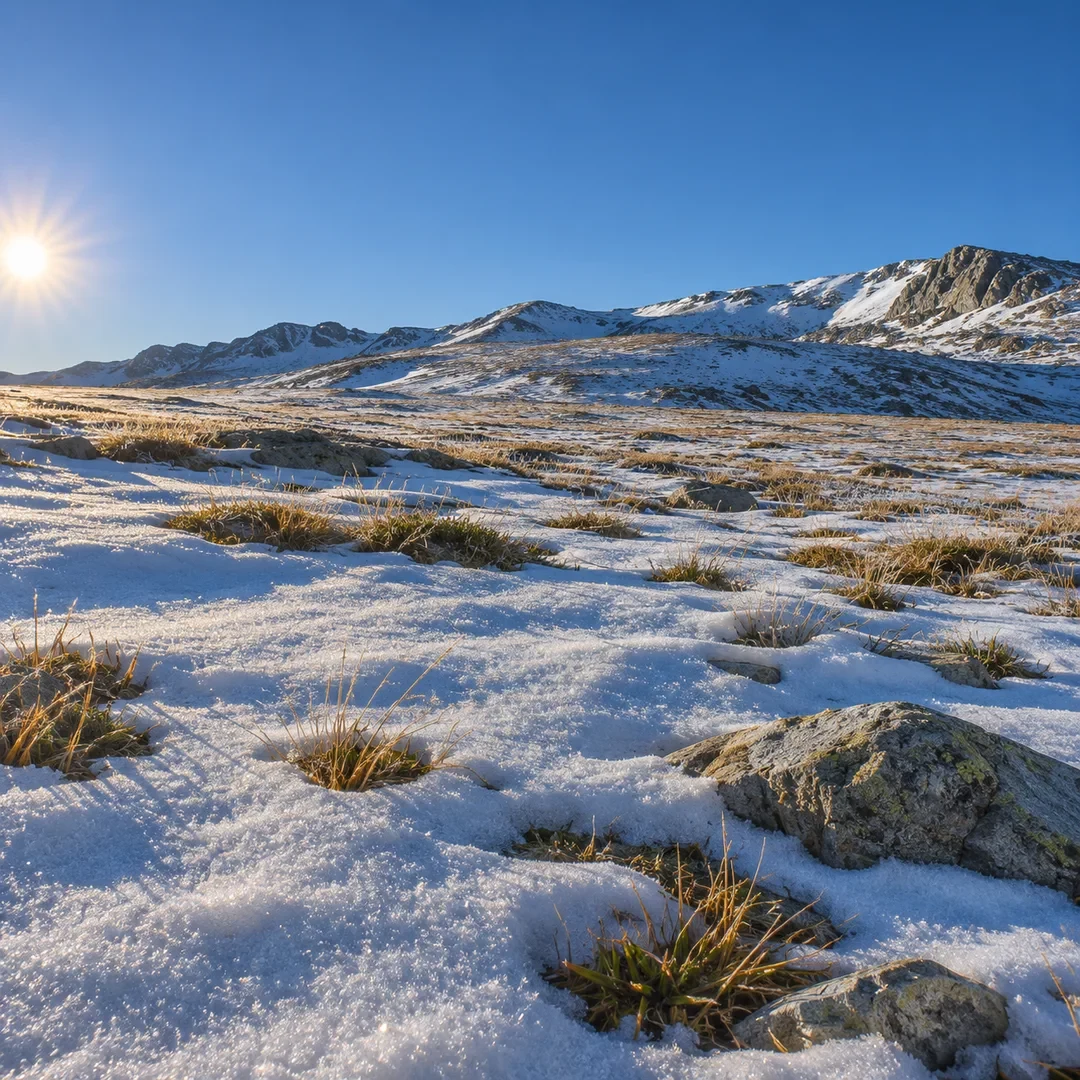
From ice straight to vapour
A snow patch can shrink after several cold days without leaving a visible puddle. Sublimation is one possible explanation. Water molecules leave the ice crystals and enter the air directly as water vapour. This takes energy, but it skips the liquid stage.
What favours sublimation
Dry air favours the transfer of vapour away from snow. Wind can replace the thin layer of air next to the surface, while sunlight can supply energy even when the air temperature is below freezing. The conditions right at the snow surface matter, so a windy or sunny afternoon alone gives little indication of how much water was lost.
What you can tell from a shrinking patch
Wind can shift snow elsewhere, and settling can reduce snow depth without reducing its water content. The surface can also warm enough in sunlight to melt while the surrounding air is still below freezing. If you are tracking a patch, compare it from the same viewpoint and note the wind, sunlight and condition of the surface. Estimating how much water is left takes more than a depth reading: you also need the snow density.
Source: US Geological Survey (USGS), sublimation and the water cycle.