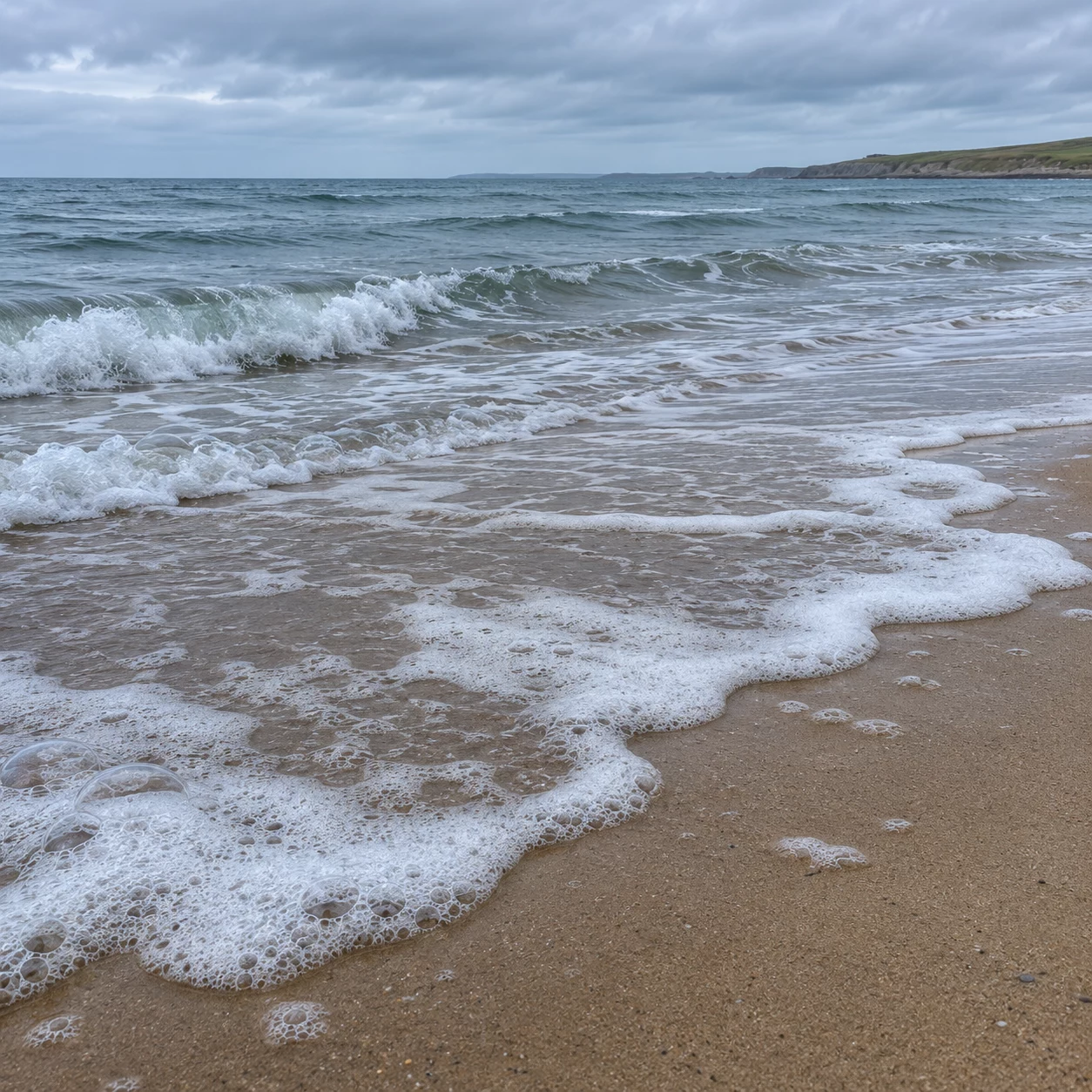
A wave breaks, leaves a white line on the sand and retreats. Sometimes the line vanishes almost immediately. At other times the foam from several waves piles up and blows along the beach. The difference depends on how the water moves and what is dissolved in it.
What keeps the bubbles intact
Breaking waves mix air into the water. Some dissolved organic compounds, including material released as algae break down, can stabilise the films around the bubbles. Two beaches with similar surf can therefore have quite different amounts of foam.
Why it gathers in one spot
Bubbles form where waves break. Nearshore currents can gather the foam into streaks, and an onshore wind can push it onto wet sand. In a small bay, watch whether the next wave makes fresh foam or simply carries in an existing patch. The place where foam collects may be some distance from where it formed.
What you can tell by looking
Appearance alone cannot identify the cause. Foam can have a natural origin, while human-made substances can also contribute. Follow any local water-quality notice. To judge sea conditions, check the wave forecast. The amount of foam on the beach depends on more than wave size.