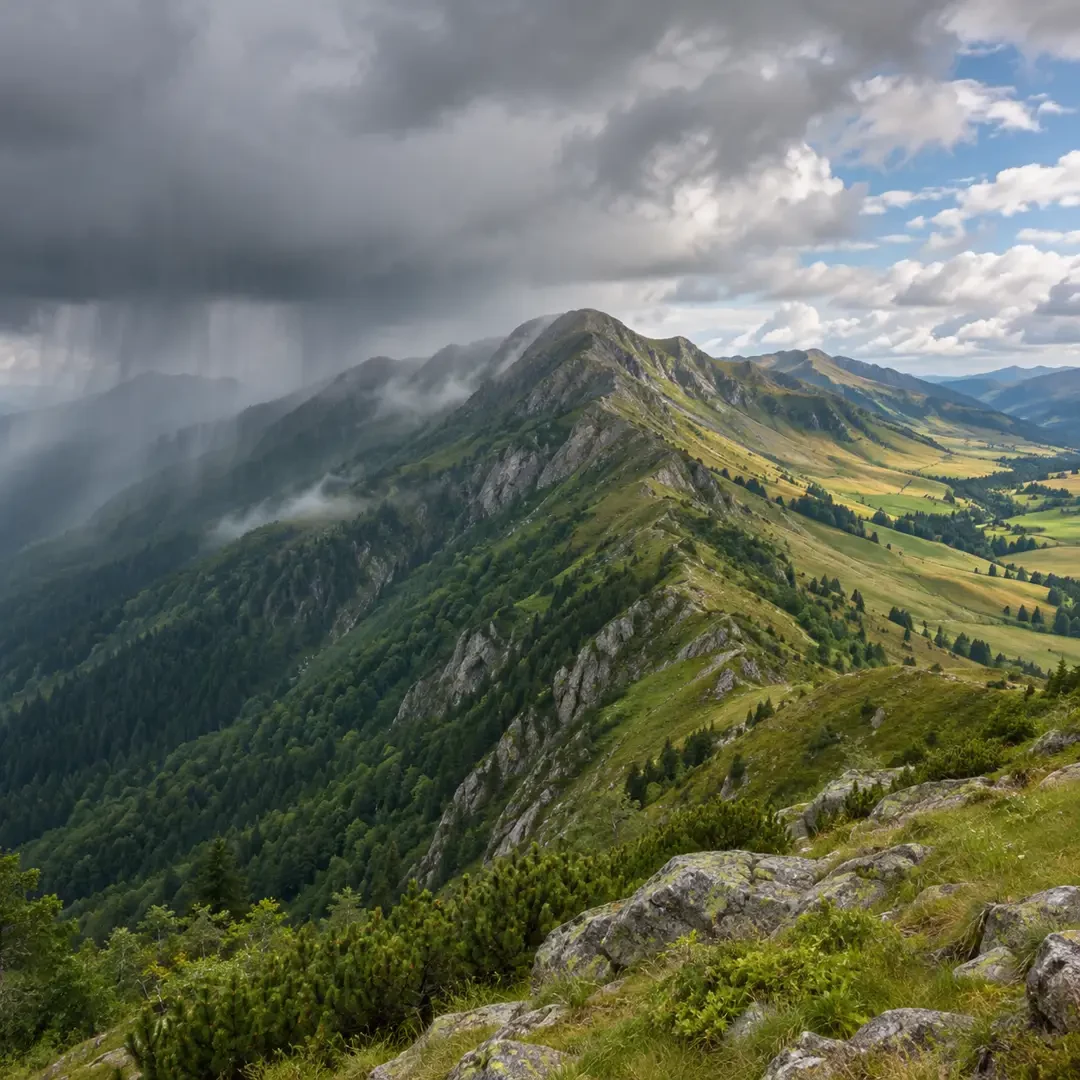
The wipers can be going flat out on one side of a mountain pass and fall quiet in the next valley. One possible reason is a rain shadow, an area downwind of high ground that receives less precipitation.
What happens on either slope
The windward slope faces the incoming airflow. When moist air is forced uphill, it expands and cools. If it reaches saturation, cloud forms and precipitation can increase. On the other side, called the lee, descending air is compressed and warms. Its relative humidity generally falls, allowing cloud to thin. Some moisture may also have fallen as precipitation on the first slope.
Read both sides of the forecast
Picture a range running north to south. In a moist westerly flow, the western slope is windward. If the flow turns easterly, the exposed slope changes. In the mountainous west of the UK, Atlantic winds help explain why average rainfall is higher than in many eastern areas.
Before a walk, compare forecasts for the trailhead, ridge and destination. Check wind direction at ridge height and the timing of any front. Rain can spill over the crest and showers can develop independently in the lee. Even a valley that is usually drier can have a day of heavy rain.