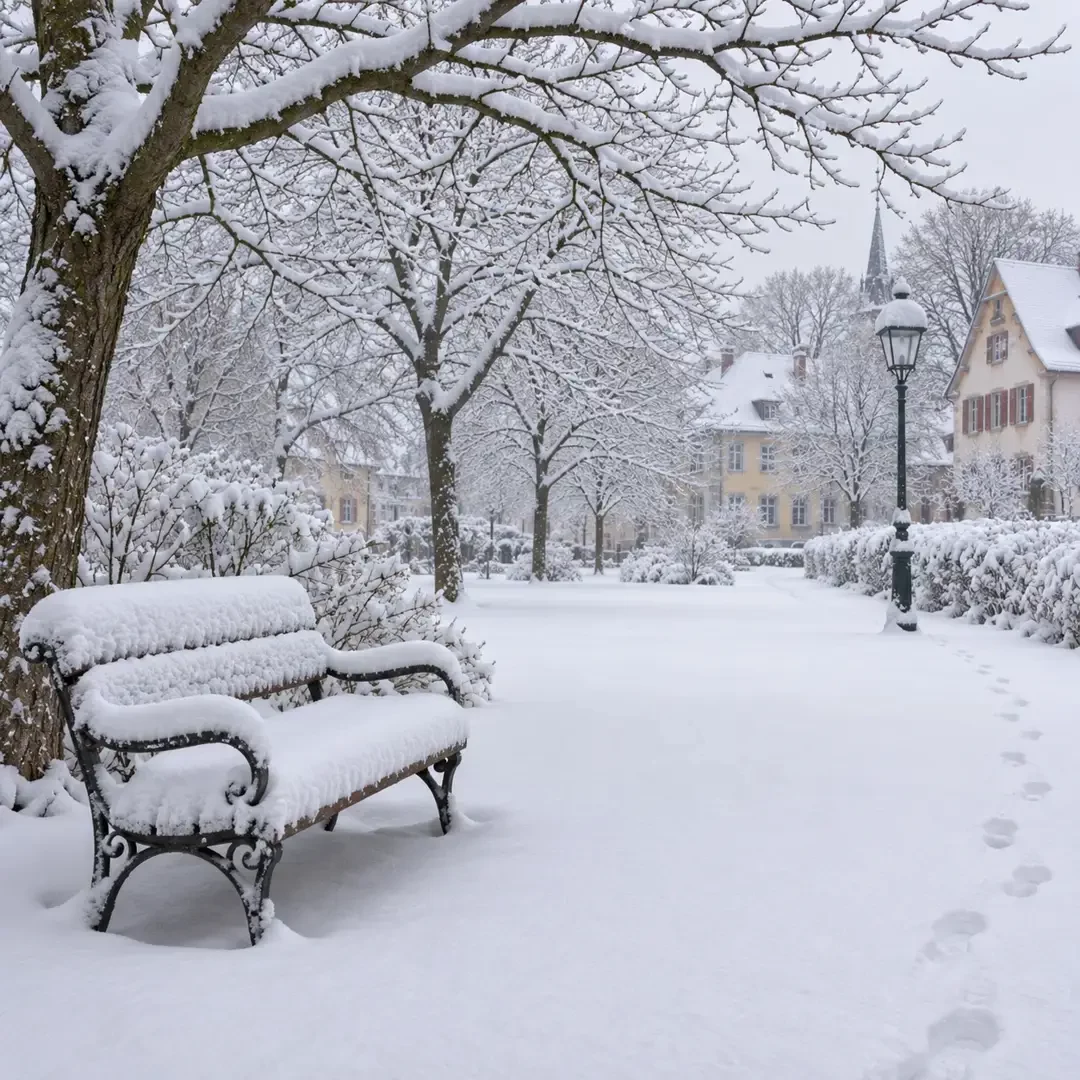
After snowfall, a park or street can sound different: less background noise and a sense of calm that goes beyond the white scenery. Fresh snow changes how the ground absorbs and reflects some sound. That does not mean every snowfall produces absolute silence.
A surface full of spaces
Soft snow contains a network of crystals and air spaces. Its porous structure can absorb acoustic energy instead of reflecting all of it back into the surroundings. This makes it different from hard paving. SLF links the effect to porosity, while acoustic research shows that snow structure matters for attenuation.
The effect changes as snow ages
Snow does not keep its original texture indefinitely. Settling, compaction and crust formation alter its acoustic properties. NSIDC distinguishes soft snow, which absorbs sound efficiently, from hard crusts and icy surfaces, which absorb less and may reflect more. Two days with apparently similar snow depth can therefore sound different.
Noise sources also change
The University of Kentucky notes that snowflakes generally strike surfaces more quietly than raindrops. Reduced traffic or activity can also mean fewer sound sources. These are separate effects: producing less noise is different from the ground absorbing some existing noise. The calm should not be attributed to one mechanism alone.
A simple observation
From a safe location, compare a garden under soft snow with a nearby cleared pavement. Keep the sound sources and distances as similar as possible. This is not a laboratory measurement: wind, buildings and traffic can alter the comparison. Avoid assigning a decibel reduction without instruments and a suitable method.
Quiet does not establish snowpack stability or rule out ice. Check forecasts, warnings and the relevant avalanche bulletin before a mountain outing. The cover is illustrative and does not depict a current snowfall at a named location.