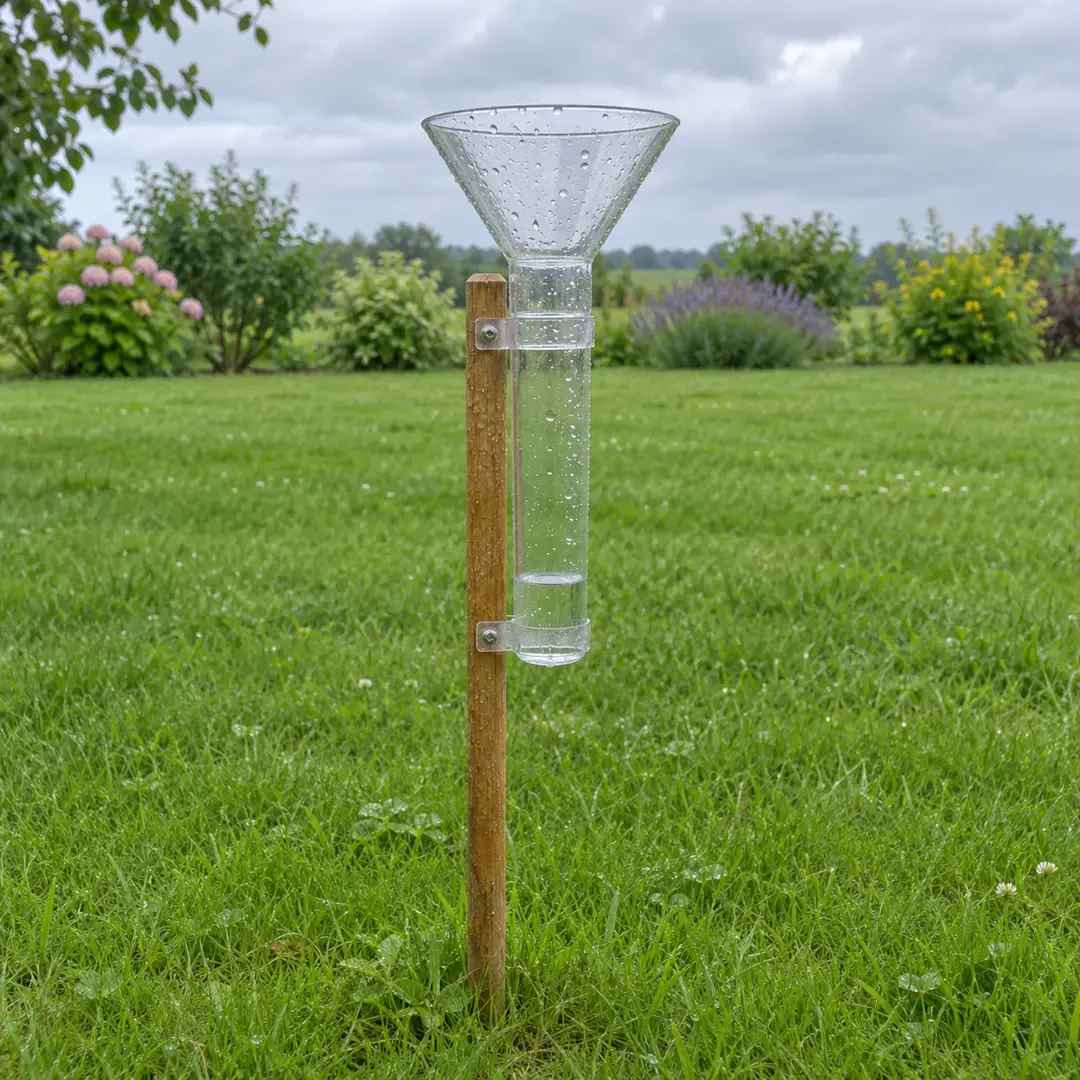
Choose a suitable spot
Find a spot where rain can fall directly into the opening. Avoid eaves, nearby trees and roof edges, which can block rain or channel extra drops into the gauge. Aim for a clear patch sheltered from the strongest gusts, with enough space between the gauge and whatever provides shelter.
Set it up for consistent readings
Fix it securely and use a level to check the rim. Keep the opening above any part of the support that could intercept rain. Stay clear of sprinklers and hard surfaces that can splash water into the collector. As a guide for open ground, the US National Weather Service recommends leaving at least twice an obstruction’s height between it and the gauge. In a small garden, choose the least affected spot and note its limitations.
Keep a rainfall log
Read the total at the same time and record the period it covers. For a manual gauge, use the manufacturer’s scale and empty it after recording. Keep 0 mm separate from a missed reading. If it overflows, mark the total as incomplete. Clear leaves from the funnel and check the level again if you move or knock the gauge.
When a nearby station reports a different total
Check the measuring period first, then consider exposure, especially if it was windy. Local showers can deliver different totals to two nearby sites even when both gauges are working properly.