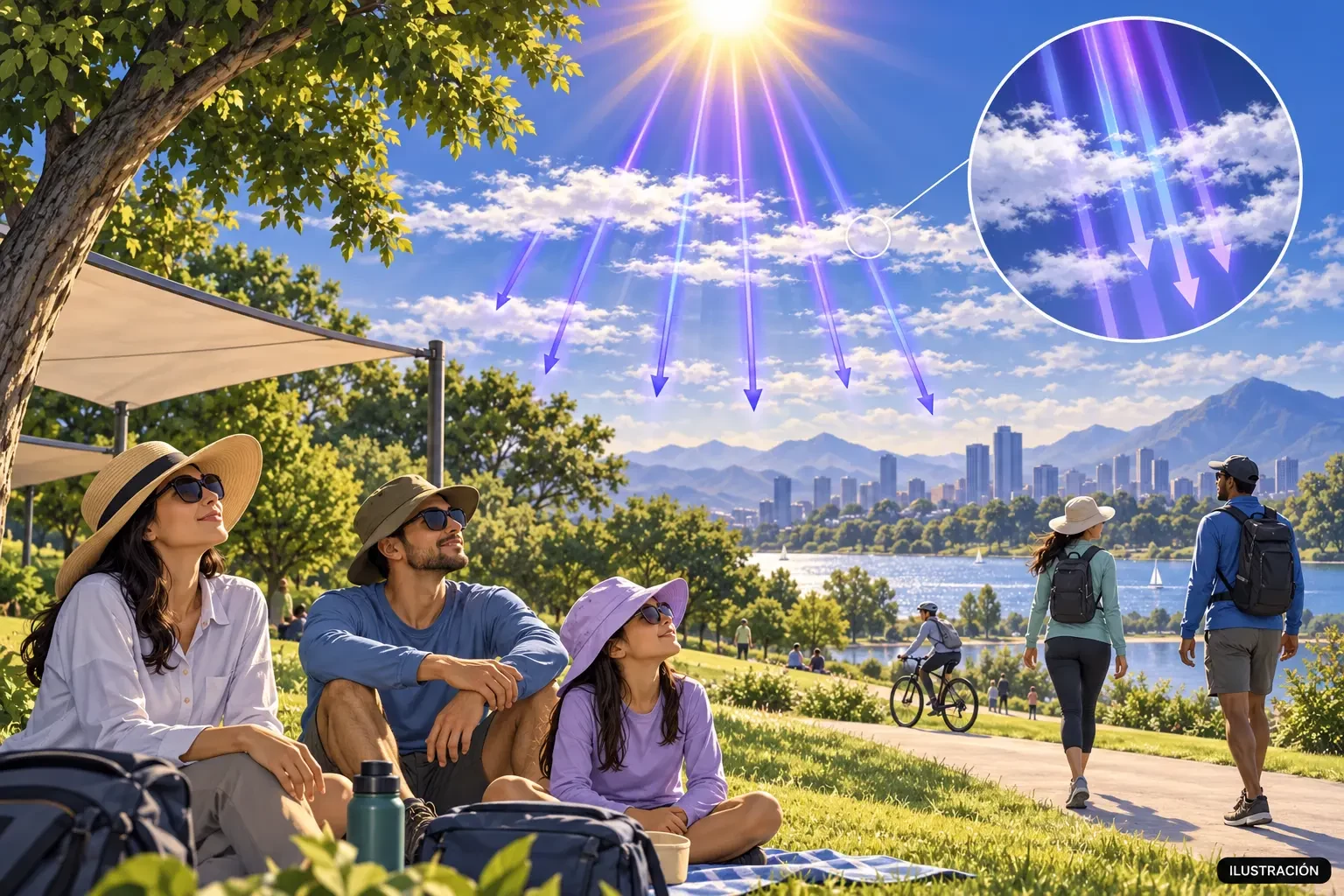
The ultraviolet index (UVI) expresses, on a simple scale, the intensity of solar radiation capable of harming skin and eyes at a particular place and time. The higher the value, the greater the potential for damage and the less time it may take to occur. It is not a temperature or a “feels like” value: a cool, breezy day can still have a high UVI.
This is educational guidance and does not report active warnings. When planning an activity, use the latest UV and weather forecast from the official service for the country you are in.
How to read the scale
- 0–2, low: risk is limited for most people, although long exposure and strong reflection still matter.
- 3–5, moderate: begin taking protective measures, especially around the middle of the day.
- 6–7, high: reduce time in direct sun, seek shade and combine several barriers.
- 8–10, very high: avoid exposure during the central hours where possible and plan indoor or shaded breaks.
- 11 or more, extreme: comprehensive protection and strict planning are essential.
AEMET notes that the theoretical minimum is zero and that the scale has no upper limit. The number cannot be converted into one universal “time to burn”: skin type, time of day, duration, photosensitising medicines, altitude and reflected radiation all change exposure.
Why cloud does not equal protection
Thick overcast may reduce ultraviolet radiation, but thin or broken cloud can let a substantial proportion through. Cloud edges can also scatter sunlight, producing quick variations. You therefore cannot judge UV risk from the brightness of the sky or from how cool the air feels.
Many forecasts display the expected daily maximum, and some products calculate a clear-sky value. Read the legend and validity time: the maximum does not describe every hour, while the real cloud effect can change within minutes.
What changes the UV index?
- Solar elevation: values are generally highest around solar noon and in seasons when the Sun is higher.
- Latitude and ozone: affect how much radiation reaches the surface.
- Altitude: there is less atmosphere above you to attenuate radiation in the mountains.
- Cloud and aerosols: may reduce it, but the outcome depends on their type and distribution.
- Reflection: snow, water and sand can add exposure from different directions, including beneath a parasol.
A practical strategy from UVI 3
- Check the forecast maximum and the hourly curve when it is available.
- Move long activities to early morning or late afternoon when the index is lower.
- Choose genuine shade and wear skin-covering clothing, a brimmed hat and UV-protective sunglasses.
- Use broad-spectrum SPF 30 or higher sunscreen on uncovered skin and reapply as directed, particularly after swimming or sweating.
- Take extra care with children and people taking medicines that increase sun sensitivity; ask a health professional if unsure.
WHO stresses that sunscreen complements rather than replaces shade and clothing, and should not be used to deliberately extend time in the sun.
UV index and heat are different hazards
Heat stress depends on temperature, humidity, wind, radiation and the body’s response. The UVI specifically describes ultraviolet radiation. You may need protection from both hazards, one or neither. See our guide to staying safe in extreme heat so the two sets of precautions are not confused.
A planning example
If a route has a forecast maximum UVI of 7 at noon, that does not mean the whole day remains at 7. The hourly trend may support an earlier start, a wooded section at midday and exposed ground later as the value falls. If thin clouds arrive, keep the protection in place: cloud alone does not guarantee a low index.