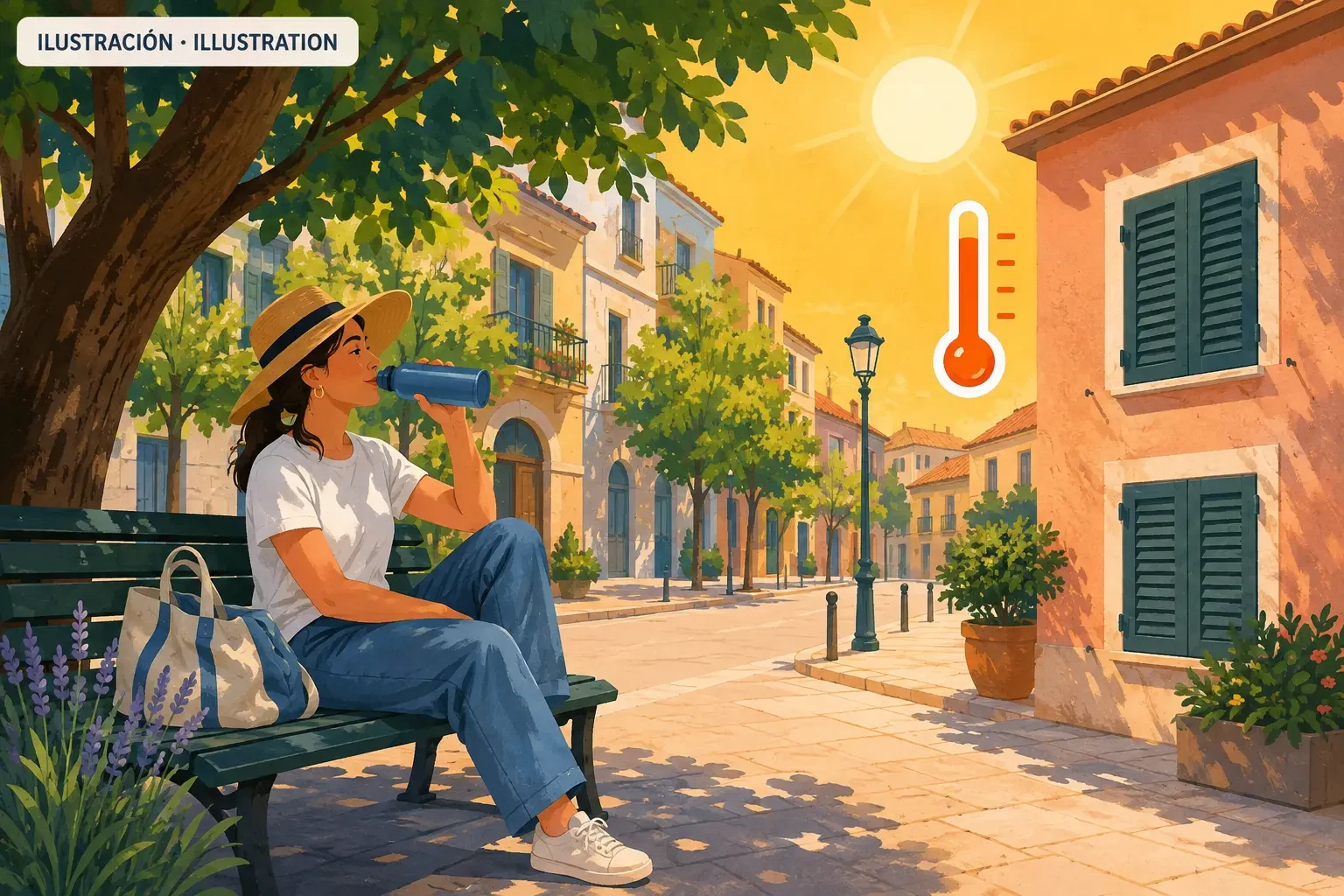
Intense heat can affect the body before a person feels obviously unwell. This guide brings together practical ways to reduce exposure and recognise situations that need help. It is educational content: it does not report active warnings and does not replace health or emergency advice.
Before making plans: read the whole warning
The forecast temperature is not the only relevant detail. Check the affected area, validity times, expected duration and official advice. A warning may change during the day. Our guide to yellow, orange and red weather warnings explains how to interpret this information in Spain. Always use the relevant national weather service for current conditions where you are.
Keeping your home cooler
- Block sunlight during the day: close shutters, blinds or curtains on sun-facing windows.
- Ventilate when it is cooler outside: use the night and early morning air, then close the home to retain the cooler air.
- Reduce indoor heat: switch off unnecessary lights and appliances and, where possible, avoid cooking at the hottest time.
- Find a cool place: if your home stores too much heat, spend part of the day in an accessible, safe, air-conditioned space.
A fan may improve comfort, but it does not cool the air. In extremely hot conditions it should not be the only protective measure.
Outdoors and during activities
- Avoid strenuous activity during the hottest hours and move it to early morning or evening.
- Seek shade, wear light and loose clothing, and protect your head and skin from the sun.
- Carry water and drink regularly rather than waiting until you feel very thirsty. Follow medical advice if your fluid intake is restricted.
- Never leave children, dependent adults or animals in a parked vehicle, even for a few minutes.
- Change or cancel a plan if the route lacks shade, water or a quick way to reach a cool place.
Heat at work needs organised prevention
For outdoor jobs and hot indoor workplaces, “pushing through” is not a safety measure. EU‑OSHA recommends adjusting working hours to avoid the hottest period, supplying water and cool areas, and training people to recognise heat-related illness. Breaks, physical workload, acclimatisation, clothing and protective equipment should be addressed through the workplace risk assessment.
Who may need extra attention?
Older people, infants, people who live alone, outdoor workers, people with chronic illness and those taking certain medicines may be more vulnerable. Keep in contact with relatives and neighbours, check that they can drink and cool down, and help them obtain medical advice when needed. Do not alter medication or fluid restrictions without professional guidance.
Warning signs and what to do
Headache, weakness, dizziness, nausea, cramps or heavy sweating can mean that heat is affecting the body. Stop the activity, move the person to a cool place, loosen clothing and begin cooling. Seek health advice if they do not improve.
Very hot skin, confusion, delirium, seizures or unconsciousness require immediate medical help. Call the emergency services and cool the person while help is on the way. Do not give fluids to someone who is unconscious or cannot swallow safely.
A quick checklist before leaving
- Read the official warning and its latest update time.
- Identify shade, drinking water and cool places along the route.
- Reduce exertion and change the timing when necessary.
- Tell someone if you will work or exercise alone.
- Check on vulnerable people around you.