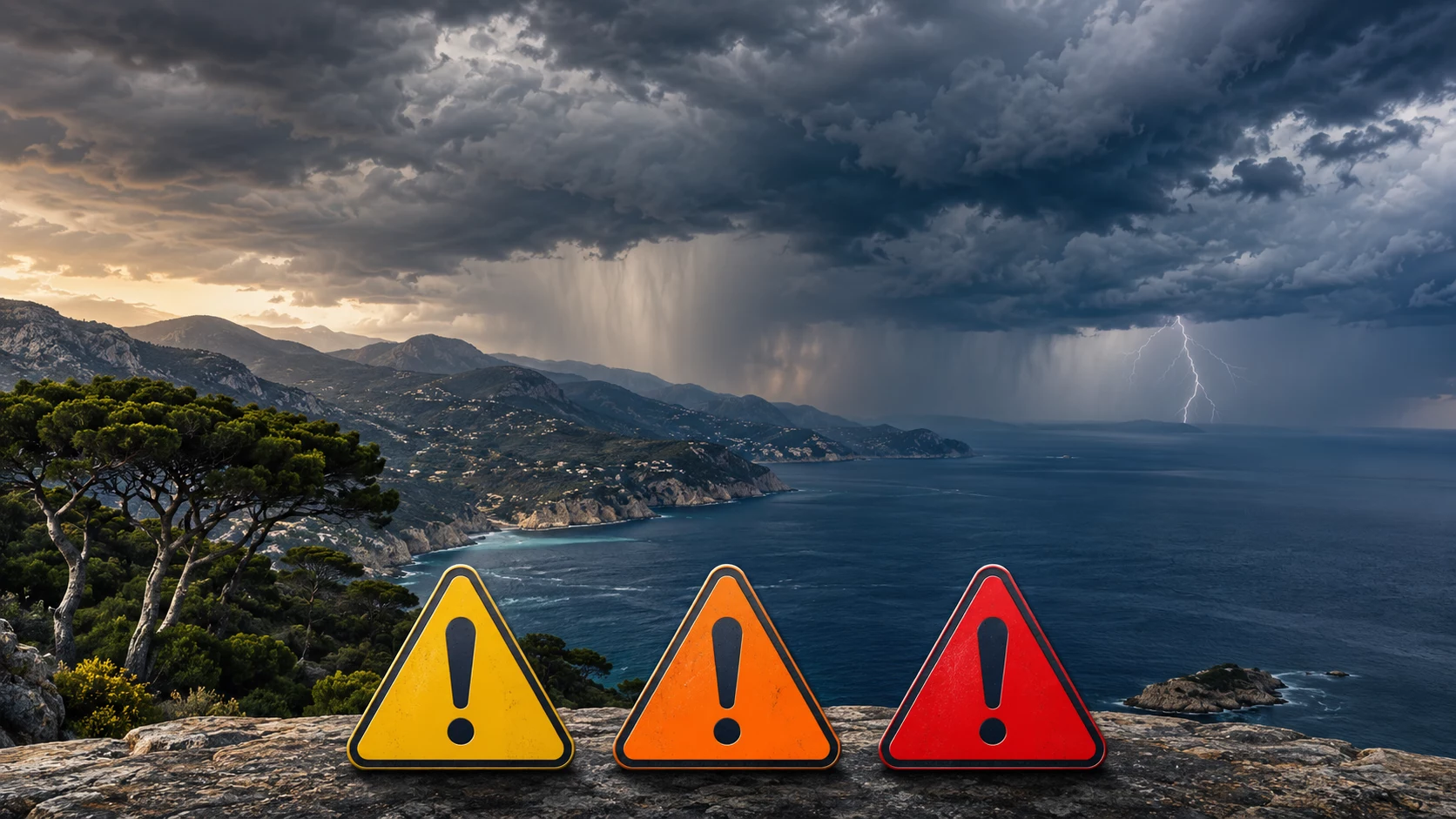
A warning map can help you plan a journey or an outdoor activity, but the colour tells only part of the story. This guide explains Spain’s AEMET system. It is educational content, not a report of active warnings.
What is a weather warning?
A forecast describes the expected weather. A warning focuses on the likelihood of a hazardous weather event in a particular area and its danger level. An observation reports what has been recorded. Keep these separate: a rain warning does not mean that rain is already falling in every affected municipality.
What each colour means
- Yellow: low danger. Impacts are possible, particularly for vulnerable or exposed people and property. Check updates and consider the nature of your activity.
- Orange: significant danger. Serious impacts are possible, particularly where exposure or vulnerability is high. Prepare precautions and review your plans.
- Red: extraordinary danger. Impacts may be very serious or catastrophic. Follow the authorities’ instructions and avoid travelling unless strictly necessary.
The level describes the weather hazard. Your actual risk also depends on your location and vulnerability: the same event may affect someone inside a building differently from someone in an exposed location.
Which weather events can trigger warnings?
They include rain, thunderstorms, snowfall, wind, high and low temperatures, and coastal phenomena. The Meteoalerta plan also covers other events, including fog, airborne dust and avalanches. Always read the named hazard: a coastal warning alone does not describe inland conditions.
How to read the warning details
- Area: check whether your location or planned route is covered.
- Validity: check the start and end dates and times, plus the latest update.
- Event and intensity: read the forecast value, its units and any comments.
- Probability: this describes the likelihood of the event, not a guarantee of equal impacts everywhere in the area.
- Forecast or observed: distinguish expected conditions from an event already being observed.
Preparing your activities
For rain or thunderstorms, check warnings before a hike. For wind or coastal hazards, pay particular attention to exposed parts of your route. For snow or extreme temperatures, also consult the relevant official guidance. Follow Civil Protection and local authority instructions. Do not wait for a red warning before paying attention.
Check again close to departure: warnings may be updated or cancelled. An old screenshot cannot establish the current situation.