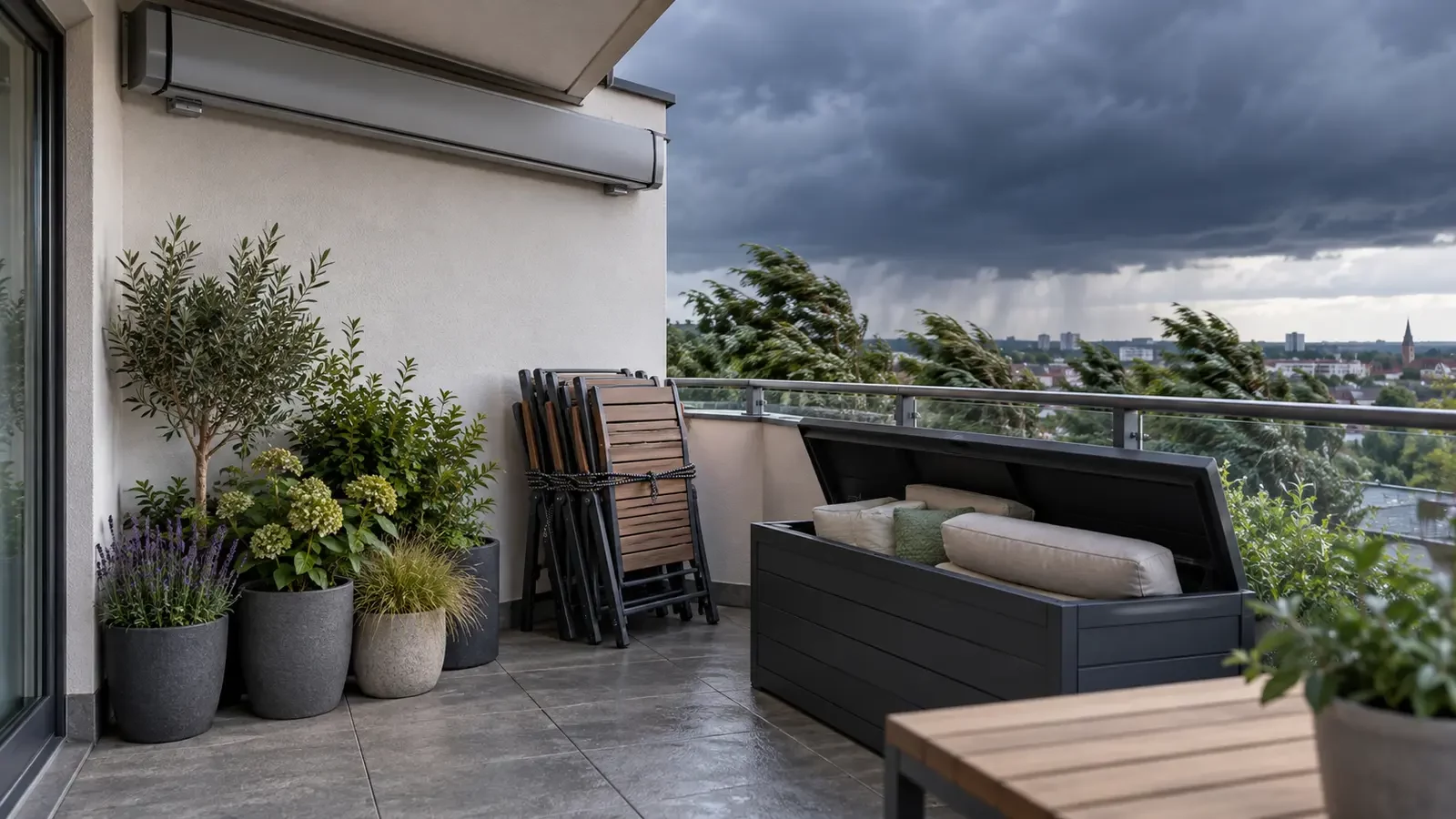
A tidy-looking balcony may still contain objects that can slide, break or fall during strong gusts. Prevention works best before the event starts: checking the space in daylight and calm conditions is far safer than chasing a parasol or planter once the wind makes movement difficult.
Focus on gusts, not only mean wind
Forecasts usually distinguish sustained or mean wind from maximum gusts. Gusts matter greatly on balconies because they apply short, intense loads to awnings, screens, furniture and plants. Building orientation, height and gaps between blocks can accelerate the air locally, so conditions on an exposed terrace may feel stronger than at street level.
Check official warnings for your area and prepare earlier if strong wind is expected with rain or thunderstorms, or overnight. Do not wait for the first object to move.
What should come indoors
- Cushions, tablecloths, light rugs and covers.
- Parasols, umbrellas and bases that could tip.
- Small pots, watering cans, tools and ornaments.
- Drying racks, pegs and hanging laundry.
- Toys, empty containers and any lightweight item.
Bringing an item inside is usually better than tying it down when space allows. An improvised rope may loosen or transfer the load to a railing that was not designed as an anchor point.
Planters and furniture
Remove pots from ledges and railings, place them on the floor and group them near a sheltered inside wall. Keep drains and exits clear. Fold or group large furniture only when it can be secured according to the manufacturer’s instructions. Turning a table upside down does not necessarily make it safe: the tabletop can still catch the wind like a sail.
Inspect dry branches, plant supports, trellises and privacy screens. Remove anything loose or damaged before the event; weight alone is not a reliable restraint.
Awnings, pergolas and parasols
Fully retract awnings and close or store parasols before the wind increases. A partly open awning still presents a large surface to gusts. For pergolas and enclosures, follow the manufacturer’s limits and safety positions: some fabric panels should be removed while other systems have a specified storm configuration.
Final check from indoors
- Close doors and windows and check their latches.
- Remove items from the edge and outside of the railing.
- Keep drains and escape routes clear.
- Photograph existing damage if it needs documenting.
- Recheck the warning and its valid period.
Once the wind has started
Do not go out to retrieve a moving object or lean over to inspect damage. Keep away from glazing if debris is striking it, and contact emergency services or building management if there is an immediate risk to people below. Wait until the event has ended before inspecting fixings, glass, drains and displaced items from a safe position.
The principle is simple: reduce exposed surface area and remove anything that could become airborne. A short preparation can prevent damage both inside and beyond your home.