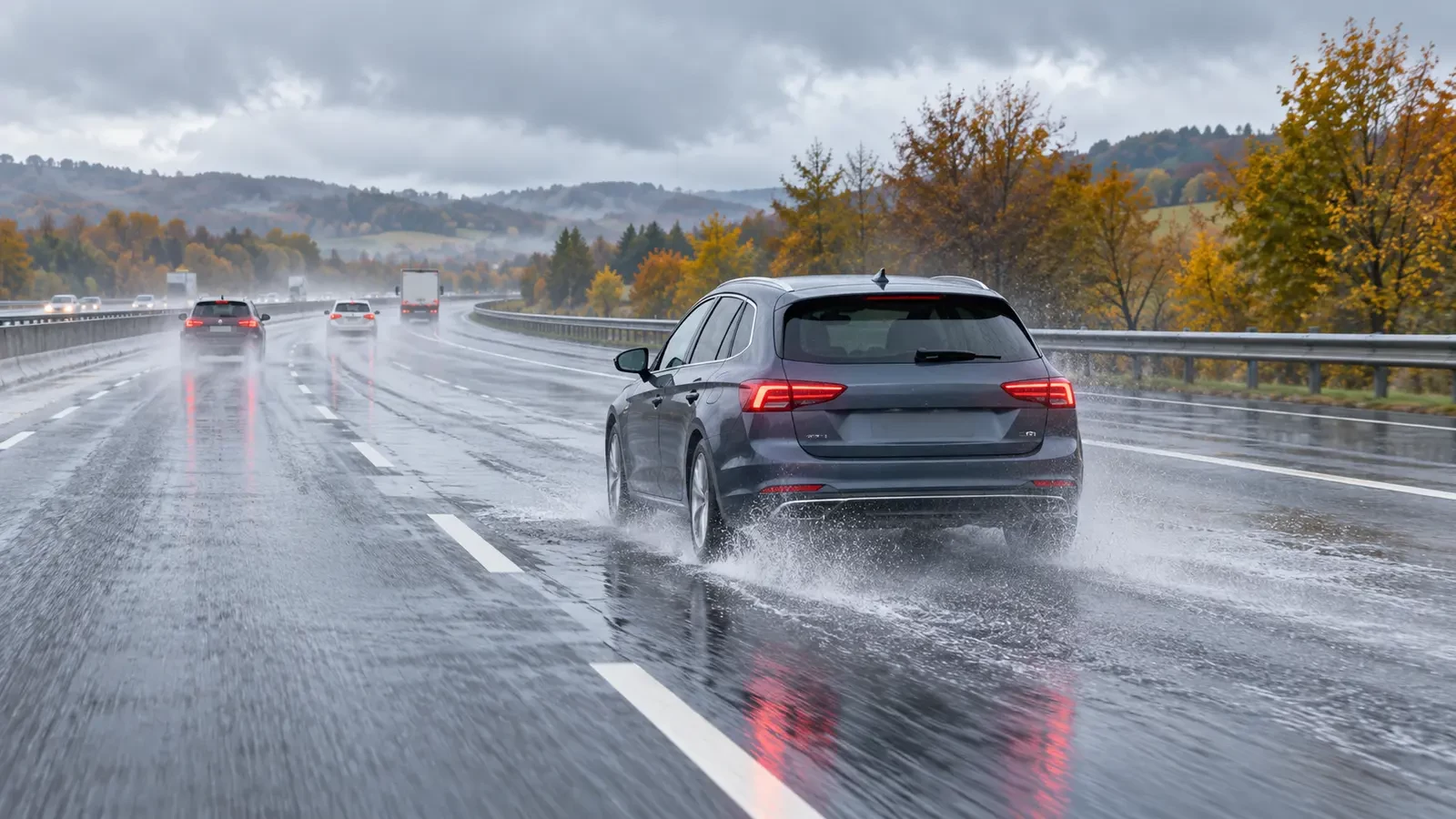
Aquaplaning happens when a tyre cannot clear the water beneath its tread quickly enough. A wedge of water builds up and reduces effective contact with the road. Steering, braking and acceleration may then produce far less response than the driver expects.
There is no single speed at which every vehicle will aquaplane. Water depth, speed, tyre pressure, tread condition, vehicle load and the road surface all matter. A posted limit is therefore not a promise that the same speed is suitable in heavy rain.
Signs that grip is being lost
The steering may suddenly feel unusually light, the vehicle may stop following small steering inputs, engine revs may change, or the car may feel as if it is gliding. Sometimes only one side or one axle encounters standing water, creating an uneven pull.
Your first task is to avoid adding a sudden force. Look towards the safe path ahead and resist the instinct to make a sharp correction.
What to do while aquaplaning
- Hold the steering wheel steadily. Keep the wheels aimed along the intended path without rapid movements.
- Ease off the accelerator smoothly. Allow speed to fall progressively.
- Do not stamp on the brake. Abrupt braking or steering can unsettle the vehicle as the tyres regain contact.
- Wait for grip to return. Once steering response comes back, make any necessary correction gently.
Avoid cruise control in heavy rain or where water is collecting. Direct control of the accelerator makes it easier to adapt to changing grip.
Reducing the risk before it starts
Slow down before you reach shiny patches, pooled water, filled wheel tracks or heavy spray. Increase the gap to the vehicle ahead. The UK Highway Code says stopping distances in wet weather will be at least double those required on dry roads.
Check tyre pressures when the tyres are cold and use the vehicle maker’s figures. Inspect tread across the width and at several points. Spain’s DGT guidance identifies excess speed, worn tread and unsuitable pressure as factors that prevent tyres from clearing water effectively.
Standing water may hide other hazards
A deep pool can conceal a pothole, pull the vehicle sideways or be deeper than it looks. If you cannot see the road surface or judge the depth, do not simply drive through. Reduce speed early and use another route where flooding is possible.
A useful wet-weather routine
- Check warnings, radar and traffic conditions before leaving.
- Inspect tyres, wipers, lights and demisting controls.
- Use progressive steering and pedal inputs and leave a larger gap.
- Avoid cruise control and unnecessary overtaking in intense rain.
- If visibility or drainage becomes poor, stop somewhere safe.
Aquaplaning may last only a few seconds, but preparation shapes the outcome. Lower speed, sound tyres and smooth inputs create far more safety margin than an improvised correction.