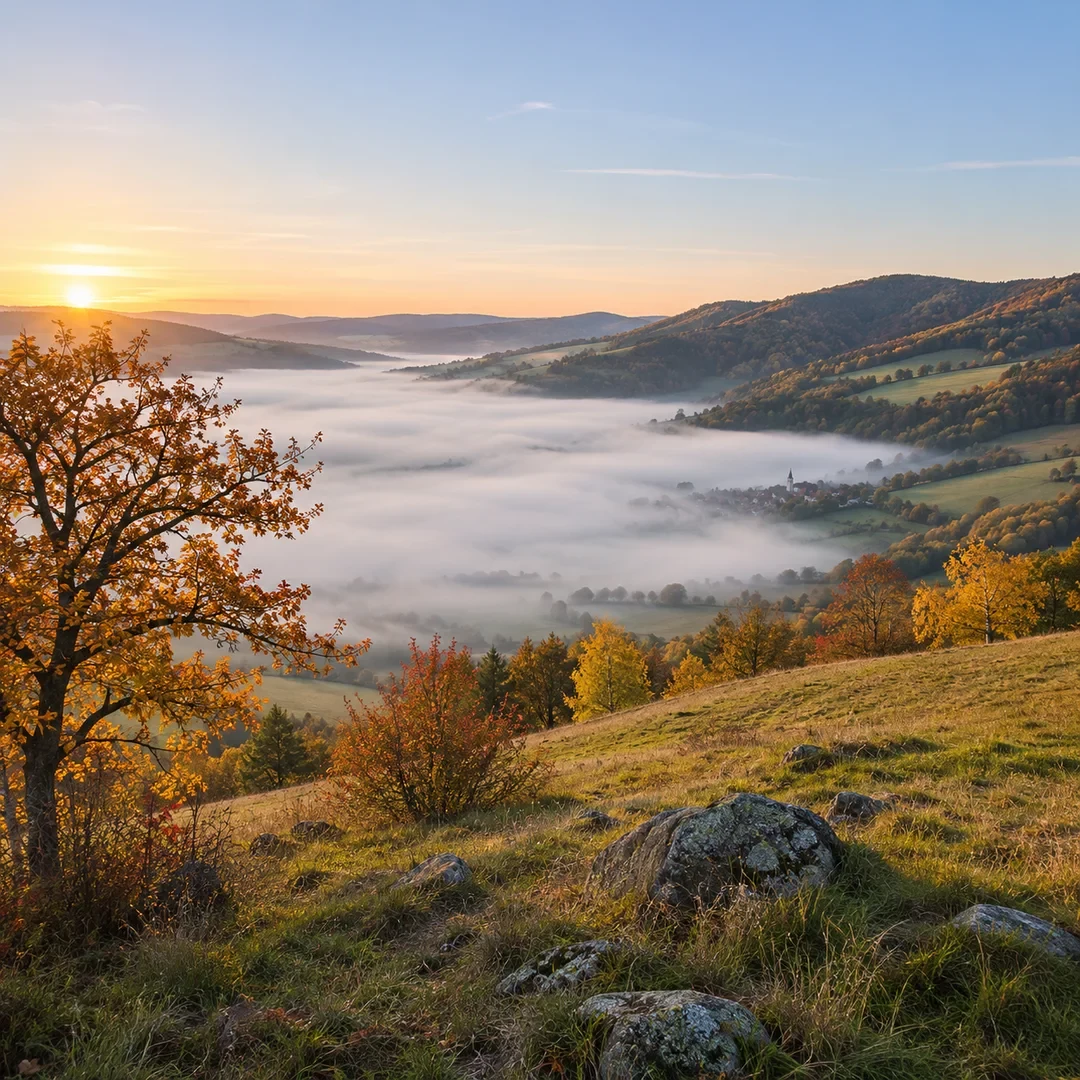
Cold air collects on the valley floor
On a clear night with light winds, the ground loses heat. Air next to the slopes cools, becomes denser and can drain downhill. The valley floor can then be colder than the slopes above it. A layer in which temperature rises with height is called a temperature inversion. If air on the valley floor cools to saturation, some water vapour condenses into droplets and fog forms.
Why the hills can stay clear
Fog occupies the moist, cold layer, which may be shallow. From a hillside you can look down on a white blanket under a clear sky. A station higher up may report good visibility while another a short distance away on the valley floor is still in fog. The height of an observation matters as much as its distance from you.
What to check in the morning
Sunshine can warm the ground and promote mixing, especially around the edges of the fog. In a shaded valley or under a persistent inversion, the fog may linger. Compare recent images or observations from the valley floor and the slope. If you only know the conditions uphill, allow for a change in visibility on the way down.