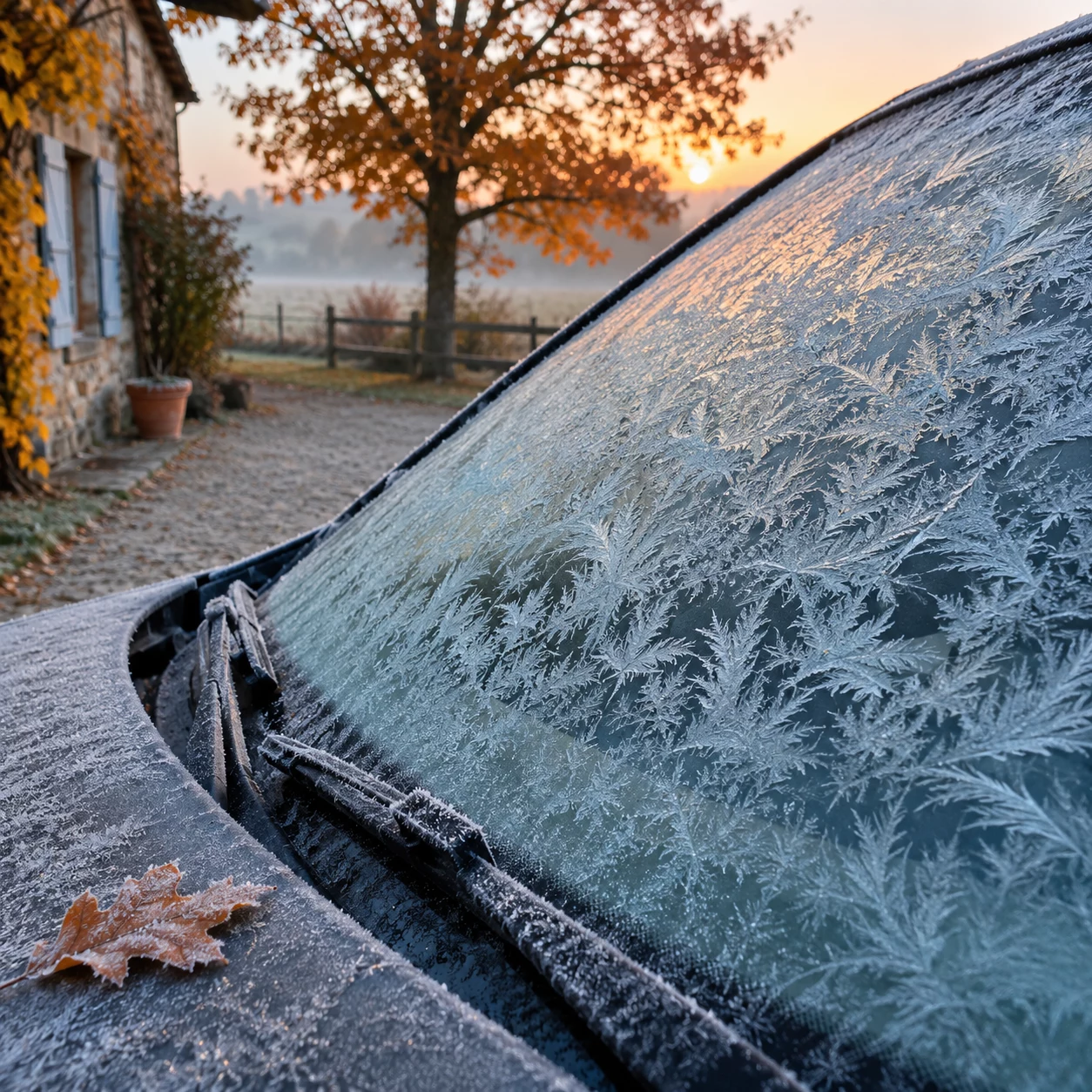
Two nearby parking spaces can behave differently. Compare sky exposure, overhead shelter and wind before a cold night.
How much sky the windscreen sees
Picture two cars parked all night, one in an open bay and the other under a carport. In clear, calm conditions the exposed windscreen can lose more energy by radiation overnight. Under the carport, the roof replaces part of the cold sky in the windscreen’s field of view and radiates back towards the glass. If moisture is available, the temperature difference can be enough for frost to form on just one car.
Morning shade tells a different story
A nearby building reduces the amount of sky visible. If it also delays direct sunshine in the morning, any frost that did form may last longer. Compare both spaces before the sun reaches either one to separate frost formation from thawing. A small side overhang usually screens less sky than a roof above the glass.
What to look for on the next cold night
Check overnight cloud and wind alongside the forecast air minimum. Compare nearby spaces at the same time and choose cars that have been standing for several hours. Note where frost sits on the glass and whether the sun reached one car first. This comparison helps explain that particular car park. Moisture, wind and passing clouds can change the result on another night.