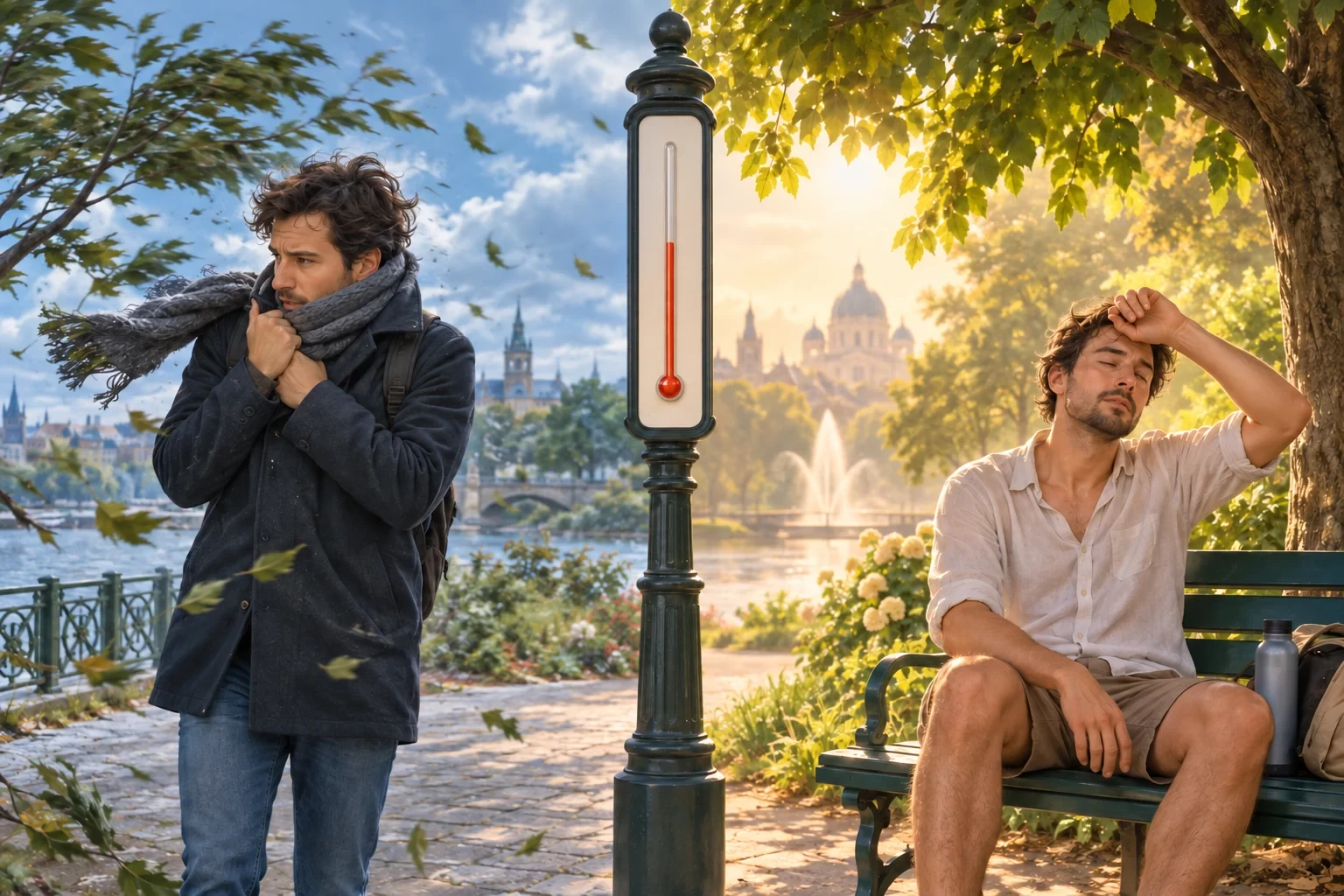
A thermometer can report one temperature while the conditions feel distinctly colder or hotter. The feels-like temperature summarises how parts of the weather affect the rate at which the human body loses or gains heat.
It is not a second temperature measured by another thermometer, and it cannot predict exactly how every person will feel. It is a calculated guide for clothing, activity and exposure, provided you understand its inputs and limitations.
Measured temperature and feels-like temperature
Air temperature is measured under standardised conditions, with the instrument protected from direct radiation. A feels-like value comes from a formula. Forecasts may label it apparent temperature, wind chill or heat index, but these terms do not always refer to the same calculation.
AEMET publishes separate cold and heat tables. Cold calculations mainly use air temperature and wind, while hot-weather calculations combine temperature and relative humidity. There is therefore no single universal feels-like equation for every situation.
Why wind makes cold feel sharper
The body warms a thin layer of air next to the skin and clothing. Wind replaces that layer and speeds up heat loss. As the air becomes colder and the wind stronger, exposed skin can cool more quickly.
Wind chill does not mean that an object will cool below the actual air temperature. It describes heat loss from a person under reference conditions. It also helps to distinguish mean wind from gusts: a brief gust may feel harsh, while an index will normally use a wind speed representative of its calculation period.
Why humidity makes heat harder to tolerate
In hot weather, sweat cools the body when it evaporates. High humidity slows that evaporation, making it harder to release heat. The same air temperature can therefore feel more oppressive in humid air than in a drier environment.
Humidity does not literally add degrees to the atmosphere; it changes the body’s heat exchange. Our guide to relative humidity and dew point explains why the humidity percentage also depends on temperature. The Met Office explains how wind and humidity contribute to feels-like values.
Sun, shade and the local setting matter too
Many indices are designed for comparable reference conditions and do not fully represent direct solar radiation. Sunshine can add substantial heat load compared with shade. Ventilation, warm walls and paving, clothing, physical effort and exposure time also matter.
That is why an app’s value is not an exact reading for every balcony, street or trail. Within one town, a sunlit paved square, a shaded park and a breezy waterfront can feel very different.
Two simple examples
- Cold and windy: two places can have the same air temperature, but faster wind will remove heat from exposed skin more quickly.
- Hot and humid: at the same air temperature, higher humidity reduces evaporative cooling and may make exertion feel harder.
You do not need to memorise a table. Treat the figure as a prompt that conditions may be more demanding on the body than the thermometer alone suggests.
Why weather services may show different numbers
Providers may use different formulae, thresholds, wind heights, rounding methods and input data. Some switch between cold and hot equations, while others use a combined apparent-temperature product. A value may also come from an observation or from a forecast model for a specific place and hour.
KNMI stresses that feels-like temperature is calculated rather than measured and notes that sunshine and humidity can affect real experience. Different numbers do not automatically mean one service is wrong: compare location, valid time and definition.
Using the value safely
- In cold weather, block the wind and protect exposed skin.
- In heat, seek shade, reduce strenuous activity during the most demanding hours and allow for water and rest.
- Remember that children, older people, outdoor workers, athletes and people with illness may respond differently.
- Check air temperature, wind, humidity, sunshine and exposure duration rather than one number alone.
- Follow current advice from the relevant weather service and civil-protection authority.
A useful index, not a warning by itself
Feels-like temperature translates several variables into a human-centred reference, but it does not replace an official warning or medical assessment. Warnings consider thresholds, duration, area and expected impacts. When a warning is in force, follow the competent authority rather than relying on one app value.