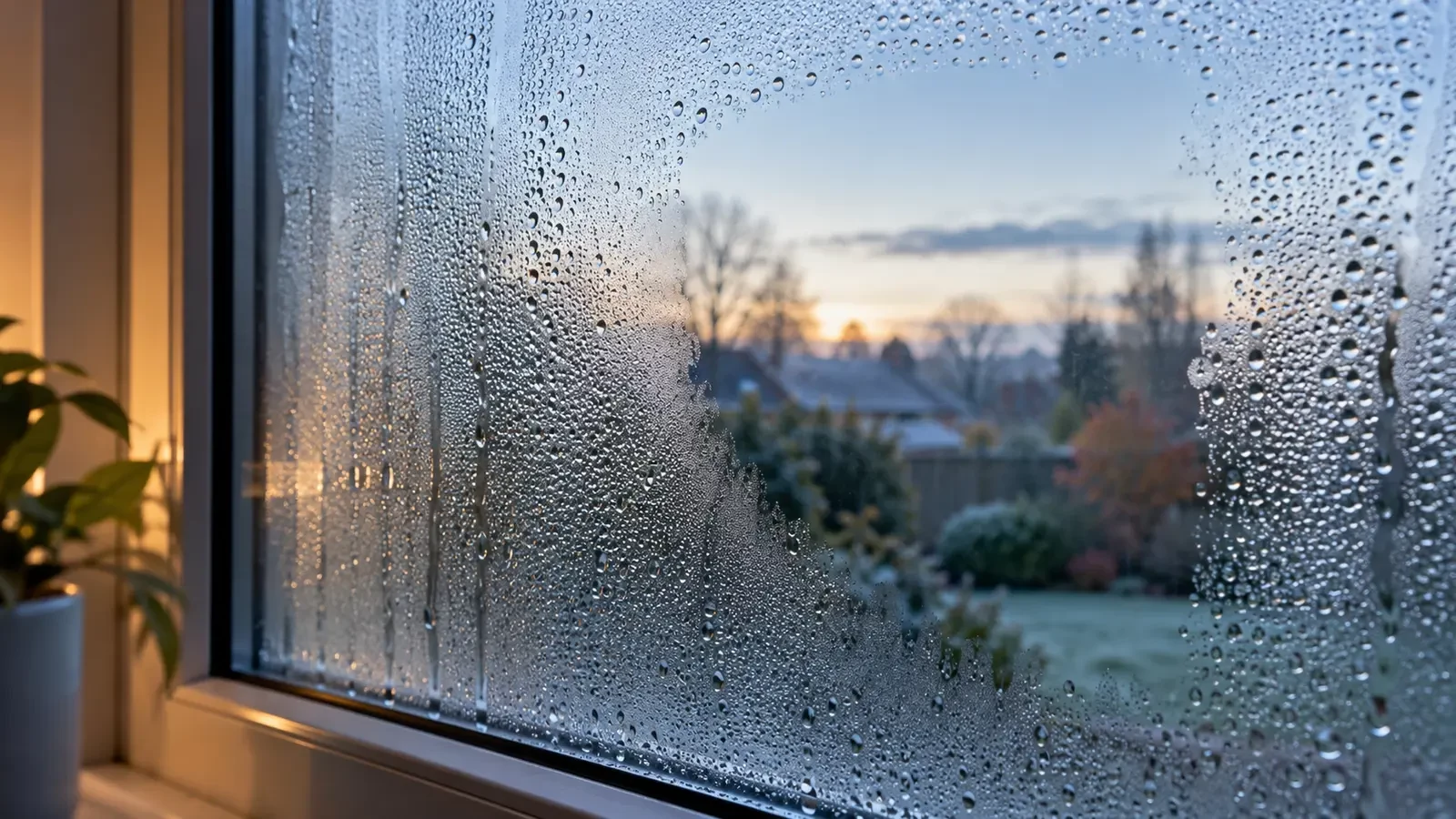
A fogged window does not simply mean that the air is “very humid”. It forms when the glass surface is cold enough to cool the adjacent air to its dew point. Some water vapour then becomes tiny liquid droplets. That simple relationship explains when fogging is likely, which side of the glass is wet and how to restore a clear view.
The trigger: glass temperature versus dew point
The dew point is the temperature at which air becomes saturated when cooled without a substantial change in its water-vapour content. If one face of the glass falls below that temperature, vapour condenses there. The process is explained in NOAA’s educational guide to condensation and dew point and the Met Office guide to how dew forms.
Relative humidity is useful, but it changes with temperature. Dew point, air temperature and the actual temperature of the glass give a more practical picture of the risk.
Is the fog on the inside or outside?
Inside: moist indoor or cabin air meets a cold inner pane. In a car, breathing, wet coats and damp mats add moisture. At home, cooking, showers and drying laundry can do the same.
Outside: the outer face is colder than the dew point of the outdoor air. This often happens near dawn after a clear, calm night, when glass loses heat by radiation. It can also occur in summer when strong air conditioning chills the glass while the outdoor air is warm and humid. Checking which side carries the droplets prevents you from applying the wrong remedy.
Why mornings are a common problem
On a clear night with little wind, exposed surfaces may cool below the air temperature measured by a standard weather station. When the pane reaches the dew point, droplets can appear even though no rain is forecast. Cloud and wind usually reduce this surface cooling, but local shelter and exposure matter.
When droplets become ice
If the surface is below 0 °C, condensed water may freeze. Frost can also form when water vapour deposits as ice. A windscreen may therefore ice over while the nearby reported air temperature is slightly above freezing: the thermometer and the glass occupy different environments and cool differently. A white layer should not automatically be treated as liquid condensation.
Clearing a car windscreen safely
- Do not set off until you have full visibility.
- Direct airflow at the windscreen and use the demist setting; air conditioning helps dry the air even when heat is also selected.
- Use fresh outside air rather than prolonged recirculation when the cabin is damp.
- Remove wet items where practical and keep the inside of the glass clean.
- For ice, use the vehicle’s defrost function and a suitable scraper; avoid very hot water because rapid thermal stress can damage glass.
Spain’s road authority, the DGT, likewise advises drivers to use climate control to clear fogged windows and maintain visibility equipment.
Managing condensation at home
Short, effective ventilation, extracting steam at source and avoiding large indoor temperature swings all help. Occasional dawn condensation may be weather-related. If it persists for hours, affects several rooms repeatedly or appears between glazing panes, ventilation, insulation and the window assembly may need professional assessment.
A quick forecast check
Compare the expected minimum temperature with the dew point. The smaller the gap, the less extra cooling a surface needs before condensation begins. Then consider cloud, wind and how exposed the glass is. This remains an estimate because forecasts rarely provide the exact pane temperature.
In short: fogging begins when one face of the glass falls below the dew point of the air beside it. Finding the wet side and managing temperature, airflow and moisture will restore visibility and help you anticipate when droplets may turn to ice.