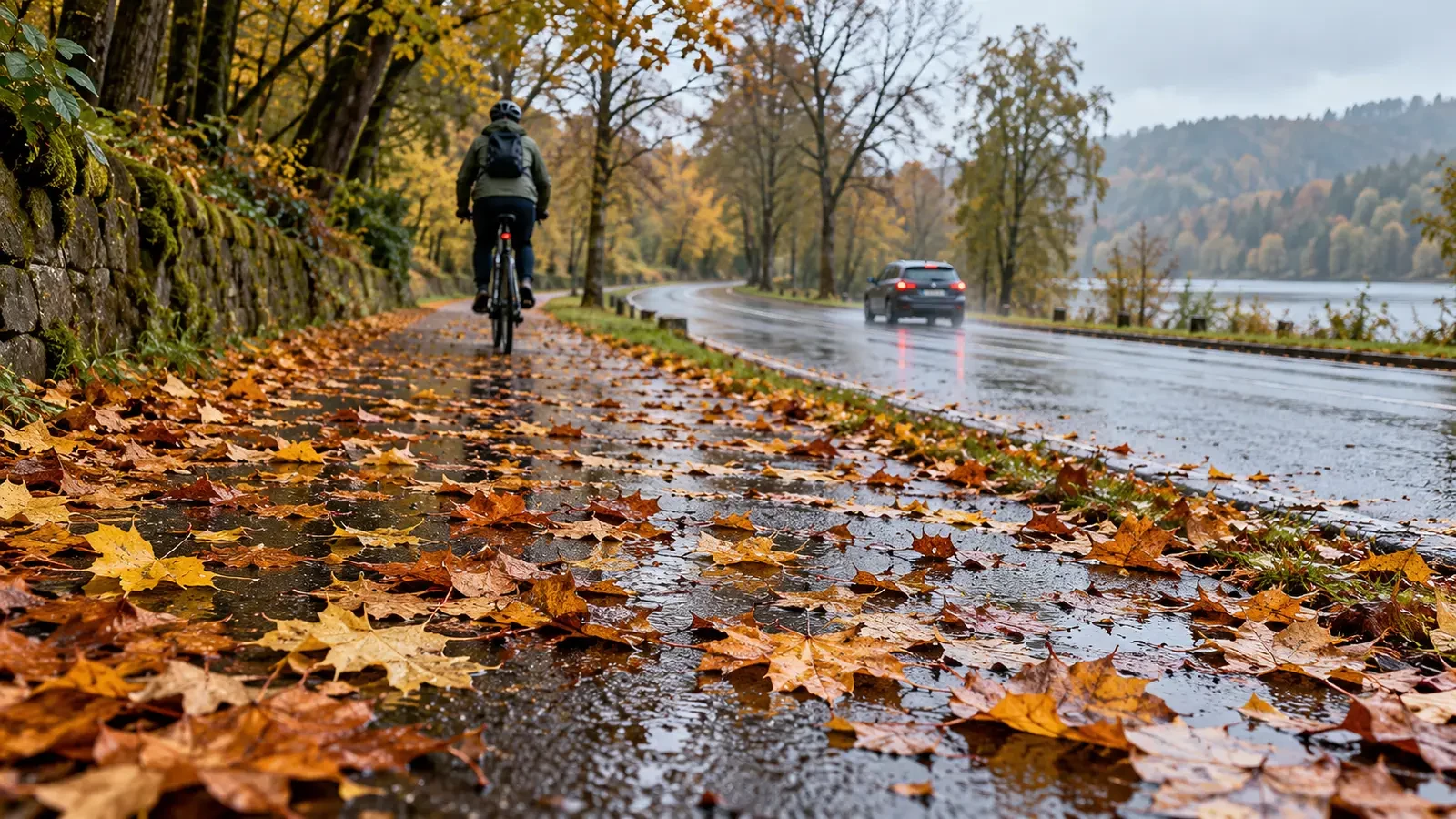
A path covered in leaves may look like nothing more than an autumn scene. After rain, however, that layer changes how shoes and tyres meet the ground. The risk is not caused by moisture alone: the depth and decay of the leaves, the surface underneath, the gradient, visibility and the manoeuvre made on top all matter.
Why leaves create a low-grip layer
Fresh leaves contain water and have relatively smooth surfaces. When they pile up and become wet, they can slide over one another and form a layer between a sole or tyre and the pavement. As they break down, they soften into leaf mulch that further reduces direct contact with a textured surface.
The hazard is greater when leaves cover road markings, polished paving, metal covers, timber, roots or mud. They can also conceal kerbs, holes and uneven ground. The UK Health and Safety Executive specifically identifies wet or decaying leaves both as a slip hazard and as something that can hide other hazards.
Conditions that deserve extra care
- After light rain or dew: the surface may look only damp, but that can be enough to bind leaves to the pavement.
- In shade and beneath trees: surfaces dry slowly and puddles, mud or early ice are harder to see.
- On bends, descents and braking zones: sudden changes in speed or direction demand more grip.
- In poor light: a uniform layer can hide texture, steps and potholes.
- After windy weather: a clear route can become covered within a short time.
When walking
Slow down before reaching the leaves and place each foot more flatly, without long strides. Avoid running, sharp turns or descending with both hands occupied. Use a clear part of the path where possible, but do not step towards traffic simply to avoid leaves. Footwear with a sound tread helps, but cannot remove the risk.
Use the handrail on steps and ramps and watch each foothold. For entrances, yards and workplace routes, regular removal is more reliable than waiting for leaves to dry.
When cycling or using a scooter
Read the surface early. Brake before the leaf-covered section and aim to cross it with the bike as upright as possible. Keep inputs smooth while on it: avoid deep lean angles, hard acceleration and abrupt use of the front brake. Leave extra space and remember that the leaves may conceal paint, drains or potholes.
The advice is not to “never brake”, but to reduce the need for heavy braking by slowing earlier and using the controls progressively. The Met Office cycling guidance notes that wet surfaces compromise tyre grip and increase the distance needed to stop.
When driving
Reduce speed before a bend or covered section, increase the gap ahead and avoid sudden braking, acceleration or steering. A few visible leaves may be the edge of a compacted layer extending under the vehicle, possibly hiding standing water or a smooth road marking.
As a cautious benchmark, the UK Highway Code states that stopping distances in wet weather will be at least double those on dry roads because tyres have less grip. This is not an exact formula for every vehicle: speed, tyres, brakes, load, gradient and surface contamination all change the outcome. The safe response is to create margin before it is needed.
A simple rule: look, anticipate and be smooth
Wet leaves are not always as slippery as ice, but they can cause an unexpected loss of grip. Look farther ahead, identify the hazard early and make every change in speed or direction gently. If the surface cannot be seen, treat it as potentially uneven and slippery. When rain, wind or ice warnings are in force, check your local official weather information before travelling.