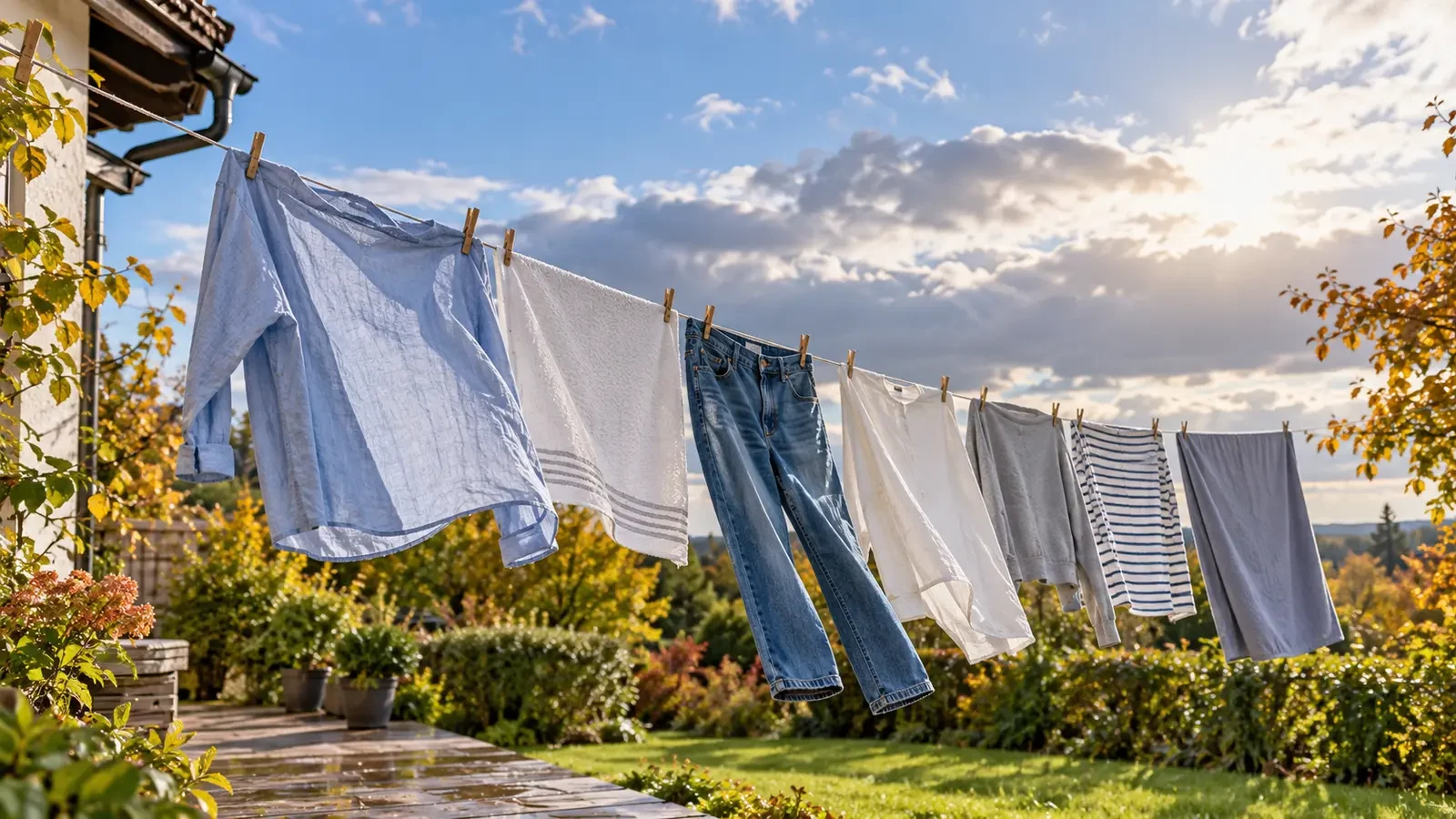
A sunshine icon alone cannot tell you whether laundry will dry outside. Drying is driven by evaporation: water moves from the fabric into the air. The process speeds up when the air can take more moisture and when fresh air keeps replacing the damp layer around each garment. A cool breezy afternoon can therefore outperform a warmer but still and humid one.
The five weather variables that matter
1. Relative humidity
Lower relative humidity generally favours evaporation. Near 100%, the air is close to saturation and drying becomes slow. There is no universal cut-off because temperature and wind also matter. As a practical guide, below 60% often gives good conditions; between 60% and 80% drying can still work with ventilation; above 80% expect slow progress, especially in calm air.
2. Wind
Wind removes the thin moist layer next to the fabric and replaces it with less saturated air. A light breeze can be more valuable than a few extra degrees of temperature. Strong wind creates a different problem: use secure pegs, check the line and do not hang items that could be blown away.
3. Temperature
Warmer air can hold more water vapour and usually speeds evaporation when other factors are equal. Temperature does not work alone, though. A dry, breezy day at 12°C may be useful, while 20°C in fog or very high humidity can perform poorly.
4. Sunshine and radiation
Sunlight warms the fabric directly and supplies energy for evaporation. Cloud does not rule out drying if the air is dry and moving. Turn thick items during the day and remember that long exposure to strong sun can fade some fabrics.
5. Rain, drizzle and fog
Do not rely only on the daily chance of rain. Check the hourly timing, expected intensity and radar when showers are nearby. Drizzle and fog add tiny droplets and maintain high humidity, so they can stop effective drying even when measurable rainfall is small.
Dew point explains damp laundry after sunset
The dew point is the temperature at which the air becomes saturated. If the evening temperature falls to that value, dew can form on exposed surfaces, including laundry. The smaller the gap between air temperature and dew point, the more humid the air and the less drying potential remains.
In autumn and winter, the best window is often from late morning to mid-afternoon. Laundry that feels almost dry can regain moisture after sunset. Bring it in before the air temperature approaches the dew point.
A quick check before starting the wash
- Find a block of several hours without rain or drizzle.
- Check hourly humidity rather than the daily average.
- Look for a safe, moderate breeze.
- Compare temperature and dew point; a widening gap through the day is favourable.
- Plan to bring the laundry in before evening cooling begins.
How to hang laundry for faster drying
- Use a good spin cycle and shake garments before hanging.
- Leave gaps so air can pass between items.
- Open zips and pockets and unfold cuffs and hems.
- Put towels, jeans and sweatshirts in the best-ventilated positions.
- Use a covered outdoor area for brief shower risk, but keep airflow open.
A simple three-level decision
Good conditions: several dry hours, low or moderate humidity, some wind and enough time before dew forms. Usable conditions: cool or cloudy but ventilated and dry; heavy items may need to finish indoors. Poor conditions: fog, drizzle, very high humidity, prolonged calm or likely rain during the available window.
The answer does not come from one magic number. Read the combination and its hourly trend. Falling humidity, a breeze and some radiation are favourable; rising evening humidity is the signal to bring the washing in.