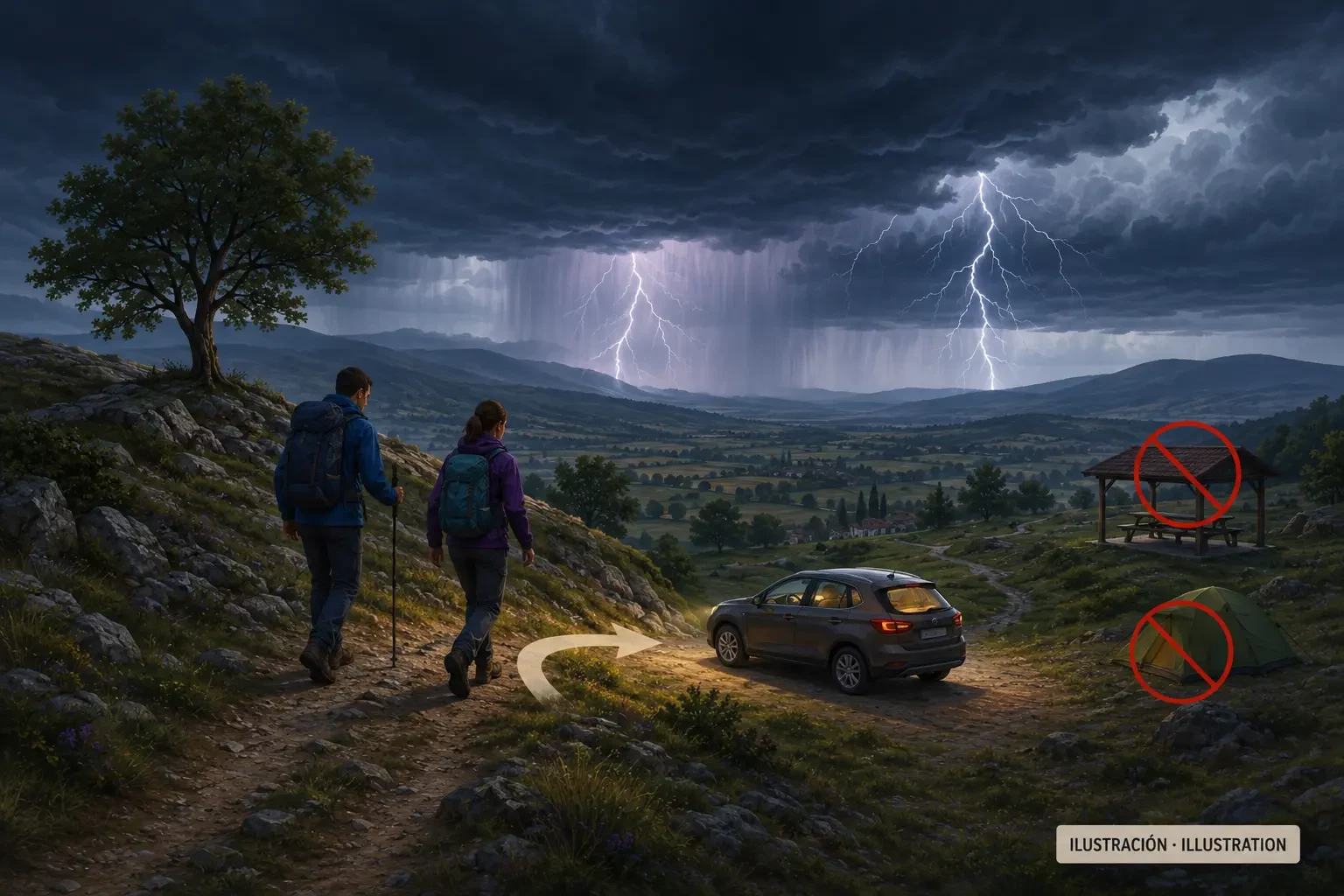
A thunderstorm can arrive sooner than expected, particularly in the mountains, near the coast or on a warm afternoon. A dangerous mistake is waiting for rain to begin: if you can hear thunder, lightning is already close enough to pose a threat. This guide explains how to reduce risk; it does not replace official warnings or instructions.
Before you leave: plan an escape route
Check the forecast and official warnings for the place and time of your activity. In Europe, Meteoalarm aggregates warnings issued by national meteorological services. For local decisions, also consult the national source linked from each warning.
Identify enclosed buildings, car parks and the time required to reach them. In mountainous areas, starting early may help where storms commonly develop during the afternoon. At beaches, reservoirs and campsites, never mistake an open-sided shelter for a safe refuge.
The practical signal: if you hear thunder, go indoors
You do not need to estimate distance by counting seconds. The simplest cautious rule is to act at the first sound of thunder: stop the activity and move without delay to a substantial enclosed building or a hard-topped enclosed vehicle with its windows closed. Germany’s national weather service, DWD, advises people to avoid remaining outdoors and to seek shelter during thunderstorms.
Which places provide protection?
- Enclosed building: usually the best option. Once inside, stay away from windows, doors, electrical equipment and plumbing until the storm has passed.
- Hard-topped enclosed vehicle: a reasonable alternative when no building is nearby. Protection mainly comes from the conducting metal body, not the tyres.
- Not safe shelters: tents, porches, bus shelters, open pavilions, sheds and isolated trees.
If you remain outside
There is no completely safe place outdoors during a thunderstorm. Reaching suitable shelter remains the priority. As you move, leave summits, ridges, open fields and beaches; get out of the water and away from pools, rivers, lakes and boats. Avoid isolated tall trees, poles, metal fences and objects that can conduct current.
If a group cannot reach shelter immediately, spread out to reduce the chance of one discharge affecting several people. These actions only reduce part of the danger; they do not make being outside safe.
Camping, hiking, cycling and beaches
- Camping: a tent does not protect against lightning. If storms are possible, your plan should include an accessible building or vehicle.
- Hiking: turn back before becoming exposed on a ridge. The return time is part of the safety plan.
- Cycling or motorcycling: stop and seek an enclosed building or vehicle; do not remain next to the bike in an exposed area.
- Beach and water sports: leave the water at the first thunder and move away from the shore to enclosed shelter.
When can you resume the activity?
The end of the rain does not mean the electrical hazard has ended. Meteorological services widely recommend waiting at least 30 minutes after the last thunder before returning outdoors. If thunder is heard again, restart the waiting period.
If someone is struck by lightning
A lightning casualty does not retain an electrical charge and is safe to touch. Call 112 immediately in the European Union, check whether the person responds and breathes, and follow the call handler’s instructions. If they are not breathing normally, begin CPR if you know how and use an automated external defibrillator when one is available.
Official sources and scope
This educational guide was reviewed on 4 September 2026. It does not describe a specific event and is not a current warning. Always follow local warnings and civil-protection instructions.