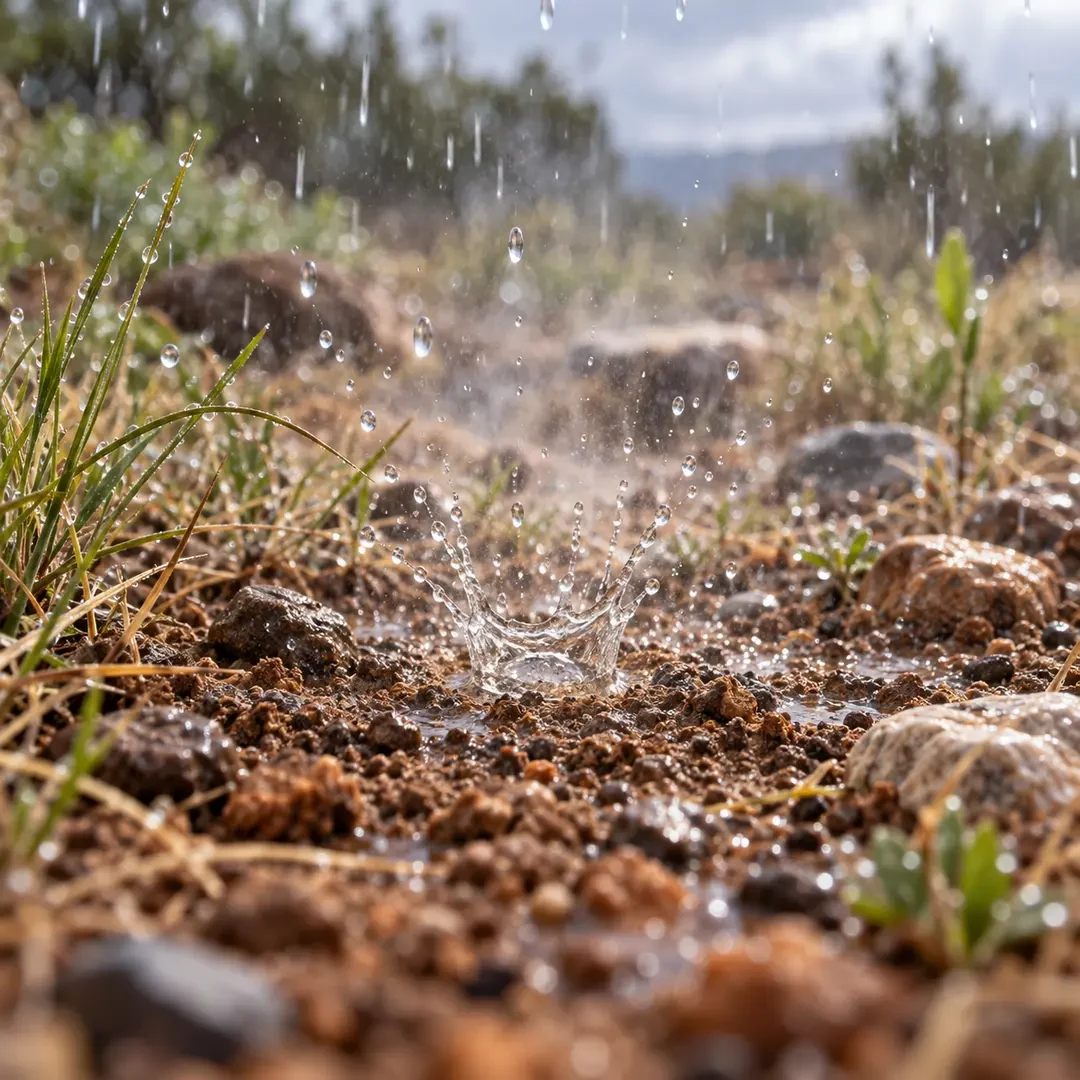
The earthy scent that accompanies the first drops of rain has a name: petrichor. It is not the smell of rainwater itself. It appears when moisture and falling drops mobilise compounds stored in porous surfaces such as soil and rock, carrying them into the air and towards our noses.
What petrichor means
The word was coined in 1964 by CSIRO researchers Isabel Joy Bear and Richard Grenfell Thomas. It combines Greek roots associated with stone and ichor, the mythical fluid of the gods. The term describes the distinctive scent released when rain reaches dry ground.
The aroma does not come from one substance alone. It can include plant oils deposited during dry weather, compounds in the soil and geosmin, an earthy-smelling molecule produced by certain soil microorganisms.
How a raindrop launches scent into the air
When a drop strikes a porous surface, it can trap tiny air bubbles. Those bubbles rise through the drop and burst, producing very small droplets or aerosols. The airborne particles can carry odorous compounds away from the soil, and wind then spreads them.
MIT researchers used high-speed cameras to observe this mechanism. Their work showed that aerosol production depends on drop speed and surface properties. Light or moderate rain on a suitable porous surface can be especially effective; a much harder impact does not automatically create more scented aerosol.
Why you may smell rain before it arrives
Humidity often rises before rainfall. Water entering the pores of soil and rock can displace volatile compounds that have accumulated there. Gusts ahead of a shower may also carry air from nearby ground where rain has already started. The scent therefore does not prove that drops are already falling at your exact location.
Thunderstorms may bring a sharper smell linked to compounds formed by electrical activity and transported through the air. That is not petrichor, although both odours can occur close together.
Why it is stronger after dry weather
During a dry spell, plant oils, dust and soil compounds accumulate. The first drops have more material to mobilise, while the contrast with the previously dry air makes the scent particularly noticeable. As steady rain continues, the surface is washed and the smell commonly weakens.
Different ground, different scent
Texture, existing moisture, vegetation, microbial activity and rainfall intensity all matter. Clay or dusty soil may release aerosols differently from asphalt. In towns, wet pavement, vegetation, dust and pollution can add their own notes, so the familiar smell is not identical everywhere.
Can petrichor predict rain?
It can be an immediate clue, but it is not a reliable forecast method. Wind may carry the smell for kilometres, light precipitation may evaporate before reaching the ground, and high humidity does not guarantee rain. Use radar, observations and official warnings for decisions.
The key idea
Petrichor is created by an interaction between rainfall and the surface below. The ground supplies the compounds; the drops help turn them into airborne aerosols. That simple process explains why the first rain on dry soil can smell so vivid and why the scent varies from place to place.