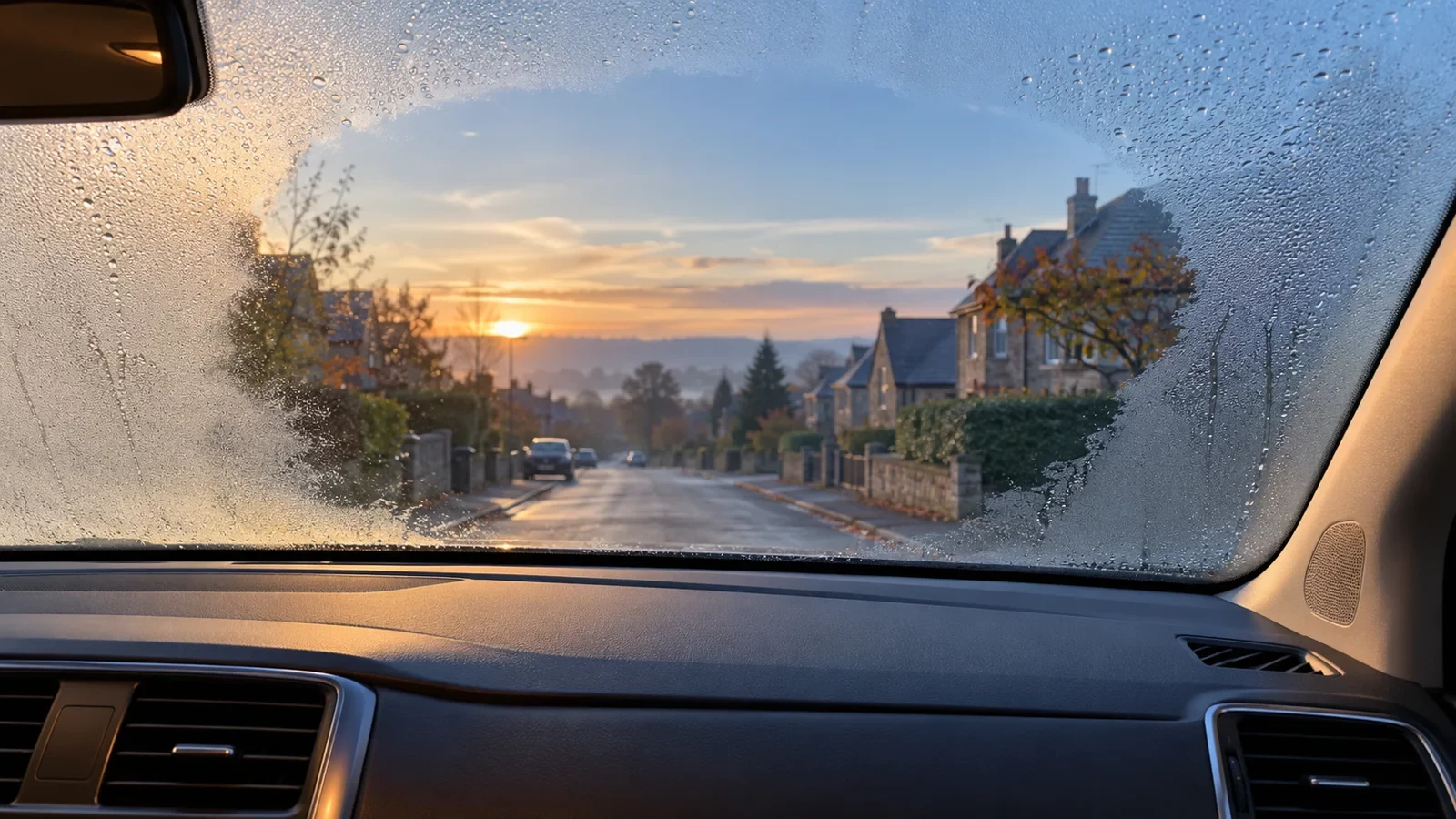
Windscreen fog is not dirt or vapour trapped inside the glass. It is a layer of tiny condensed water droplets on one surface. It forms when the glass is colder than the humid air touching it and falls below that air’s dew point. Identifying which side is wet is the fastest route to clear vision.
Why condensation appears
Air contains water vapour. When it cools to the dew point it becomes saturated and some vapour condenses. The Met Office describes dew point as the temperature at which condensation begins, influenced by humidity and pressure.
A car contains two air masses. Inside, breathing, wet coats, umbrellas, mats and footwear add moisture. Outside air may be humid after rain, fog or a clear night. The windscreen separates them and can change temperature faster than the surrounding air.
Inside or outside?
- Inside: common in cold or rainy weather when the cabin is warmer and more humid than the glass. If the wipers make no difference, the droplets are inside.
- Outside: common on humid mornings or when air conditioning chills the glass. Wipers remove it briefly, but it can return while the surface remains cold.
- Within the laminated glass: a persistent cloudy patch unaffected from either side may indicate a seal or lamination fault and needs inspection.
How to demist the inside quickly
- Direct air at the windscreen. Select the front demist function and raise the fan speed.
- Switch on air conditioning. The compressor removes moisture even when the delivered air is warm. Many cars engage it automatically in demist mode.
- Use fresh outside air. Turn recirculation off, otherwise the system keeps processing the same damp cabin air.
- Warm the glass progressively. Warm airflow raises the surface temperature and speeds evaporation; maximum heat is rarely necessary.
- Crack a window briefly if needed. This can release humid cabin air while the ventilation system catches up.
Spain’s DGT advises directing heat towards the windows to combat mist. If rain removes useful visibility, its guidance is to stop cautiously away from the carriageway until conditions improve.
When moisture is outside
Use the wipers and temporarily reduce direct cooling of the windscreen. Raise the climate temperature slightly or change the airflow distribution if the glass has become very cold. The aim is to bring its outer surface above the dew point without creating an uncomfortable cabin.
Common mistakes
- Wiping with a hand, which leaves grease and worsens night-time glare.
- Driving through a small cleared patch while peripheral vision remains blocked.
- Leaving recirculation on with passengers or wet clothing inside.
- Ignoring a blocked cabin filter or weak airflow.
- Using household mixtures that leave a film on the glass.
Preventing repeated fogging
Clean the inside glass with a suitable product and microfibre cloth; contamination gives droplets more places to form. Dry mats, remove wet items and check for leaking seals or drains. Replace the cabin filter as specified and keep dashboard vents unobstructed.
Persistent condensation with a sweet smell, damp footwell or coolant loss may indicate a fault. Fogging in a dry, empty parked car also deserves investigation.
Do not leave until the view is clear
The Highway Code says windows should be thoroughly demisted before setting off. A narrow clear strip is not enough: the windscreen, side windows and mirrors must provide a usable view of the road and surrounding traffic.
The practical sequence is simple: remove moisture from cabin air, bring the glass towards a compatible temperature, then drive. Demisting is a safety system, not merely a comfort setting.