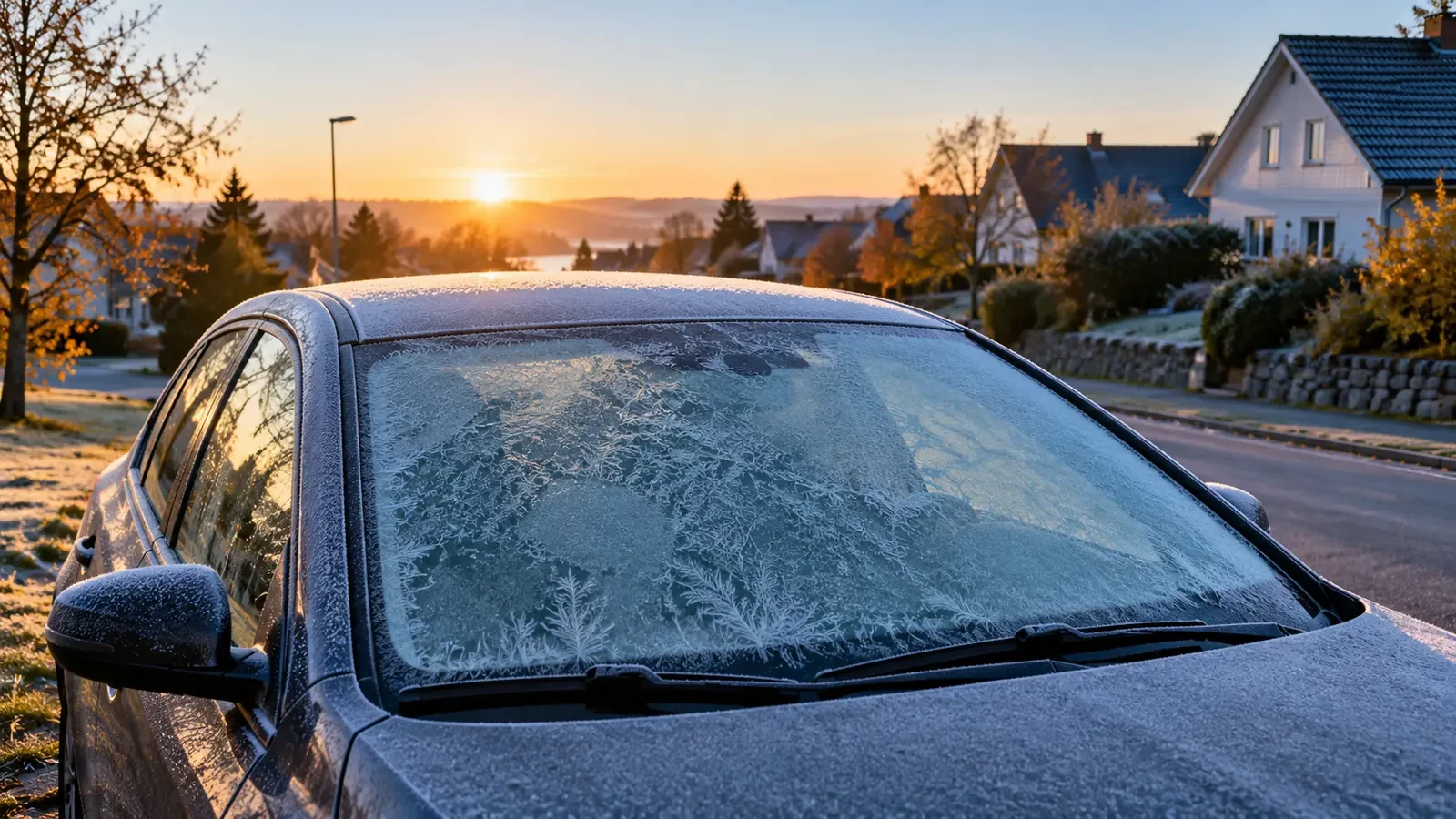
A reading of 2 or 3 °C does not guarantee an ice-free windscreen. Forecasts and weather stations normally report air temperature measured above the ground under standard conditions. The glass exchanges heat directly with the sky and can become several degrees colder than the surrounding air.
Air and glass have different temperatures
At night the car loses energy as infrared radiation. Under a clear sky, the windscreen radiates more energy than it receives. When winds are light, milder air is not mixed down efficiently enough to replace that loss. The glass can therefore fall below 0 °C while air measured one or two metres higher remains positive.
Why clear calm nights matter
Cloud acts like a radiative blanket, absorbing and returning some energy emitted by the surface. Without it, overnight cooling is stronger. Wind also matters: moderate air movement mixes the lowest layer and brings the glass closer to ambient temperature. A clear calm night at 3 °C can produce frost, while a cloudy windy night at 1 °C may not.
Moisture, dew and frost
Visible ice needs available moisture. When a surface reaches the dew point, water vapour can deposit or condense. If the glass is below freezing, the moisture forms ice crystals or liquid dew freezes. Very dry air can leave a sub-zero surface with little obvious white frost.
The forecast minimum is not the whole story
The minimum forecast describes air, not every object. The Met Office notes that frost remains possible with air forecasts between 0 and 4 °C on clear nights with light winds. The National Weather Service explains that ground and objects can reach freezing while a higher thermometer does not. Bridges, exposed roads, grass and vehicles also cool at different rates.
How to anticipate it
- Check cloud cover, wind and humidity as well as the minimum temperature.
- Expect greater risk in hollows and valleys where cold air pools.
- A car exposed to open sky generally cools more than one under a roof or dense cover.
- Allow extra time when the forecast is near 0–4 °C with a clear calm night.
Clearing ice safely
Use a proper scraper and bring in demisting heat gradually. A purpose-made de-icer can speed the process. Do not pour boiling water on the glass: thermal shock can damage it, and runoff may refreeze. Clear the entire windscreen, windows and mirrors before driving rather than relying on a small viewing hole.
The key point
Ice does not contradict a positive air reading. It means the glass itself reached 0 °C or below while sufficient moisture was present. Surface temperature matters more than the single number shown by a weather app.